

Chrome Mine K
Part 1. First Encounter.
Last December one of our friends came to visit us. Together we set out to explore some promising Albanian mines.
This mine was founded in the 1960s and closed in 2025. Active extraction was carried out through the 1970s, and by the early 1980s the main shaft had been sunk. Since then, the equipment and mining methods used at the site were barely updated. Through the 1990s and 2000s the mine was essentially idle and falling apart.
There was a time when illegal diggers would go inside with pickaxes, extracting chromite ore and selling it to private buyers. Needless to say, this kind of mining regularly led to injuries and deaths among those diggers. You can google news stories about two Albanians falling into an ore chute — one was killed outright, the other was left a bit simple. Or about someone who went in and never came back after a collapse.
Toward the mid-2010s a private company took over the mine and resumed operations, paying little attention to the site’s technical condition. Extraction continued until May 2025, when a miner was buried by a collapse on one of the levels. After that, the state regulator revoked the license and shut the mine down. Now it’s slowly being flooded by groundwater.
Arriving on site and parking behind one of the mine’s service buildings, we head off to explore the surface.
1. Let’s start from the end — the waste dump. This is where the ore cars were unloaded.
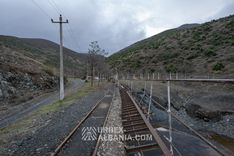
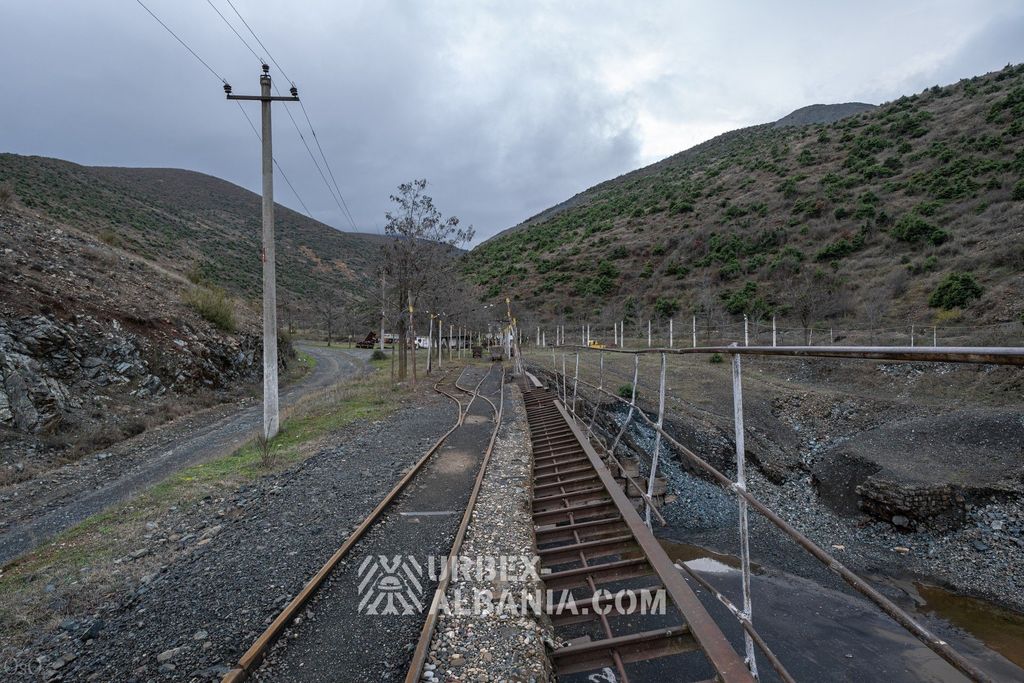
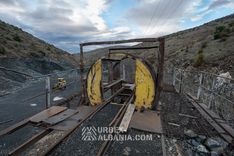
2. The ore was tipped out of the cars through rotary dumpers.
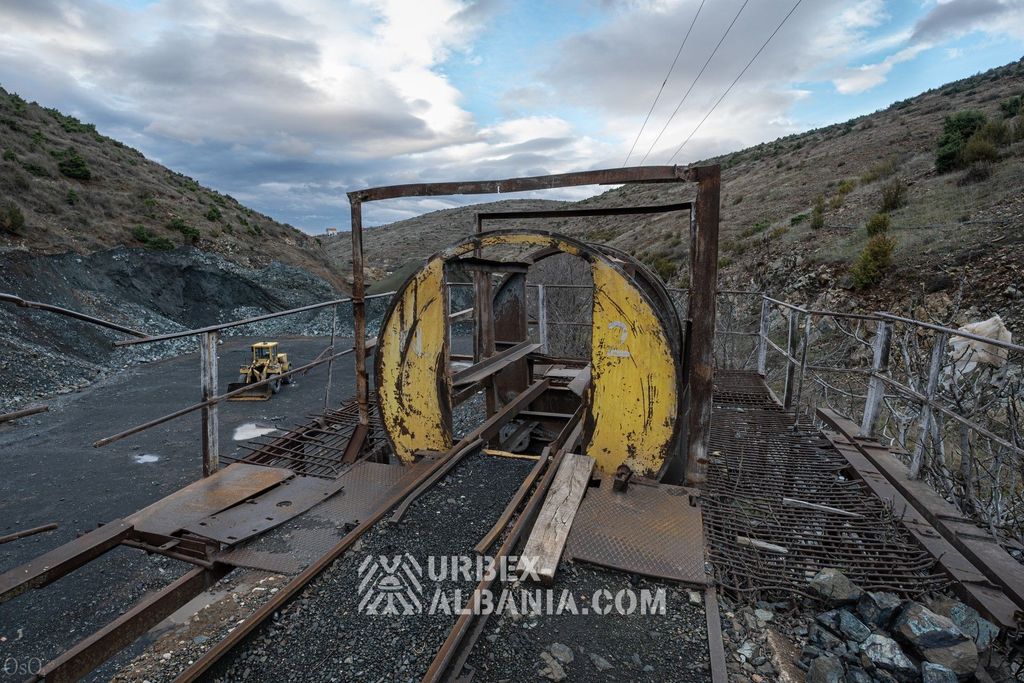
3. An excavator sorted through the ore and divided it into piles. The piles were trucked to a nearby ore-processing plant as needed. There’s still a guard on duty there, so I won’t share photos. Trust me, there’s nothing interesting anyway. The ore was simply washed by the river running through the plant, then loaded into trucks. The nearby village draws its drinking water from that same river.
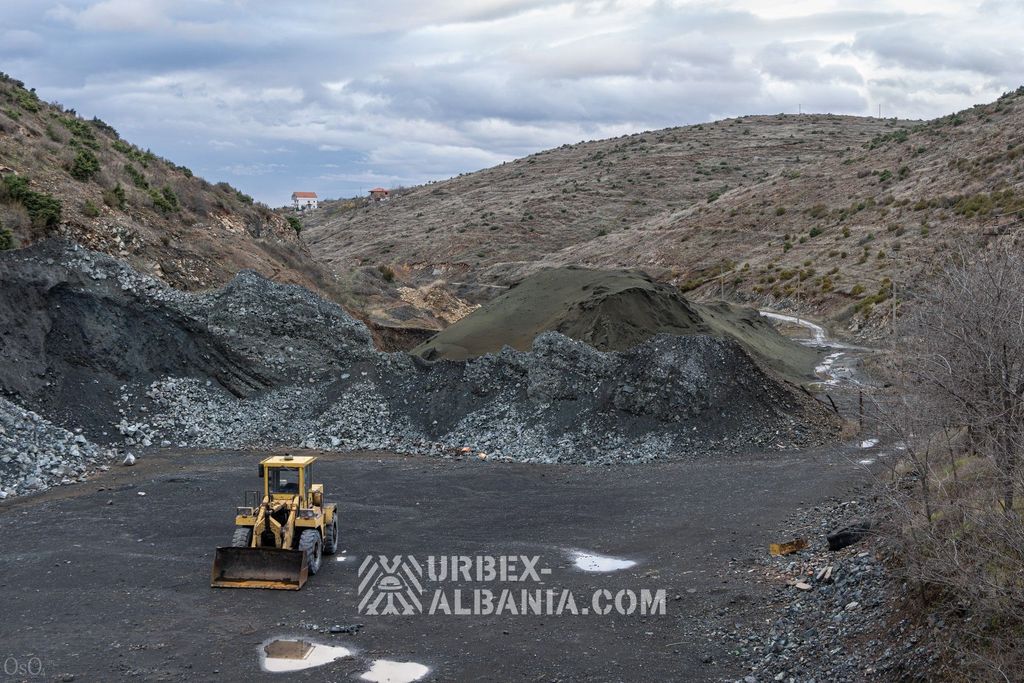
4. As they say, fear cancer — don’t be Albanian.
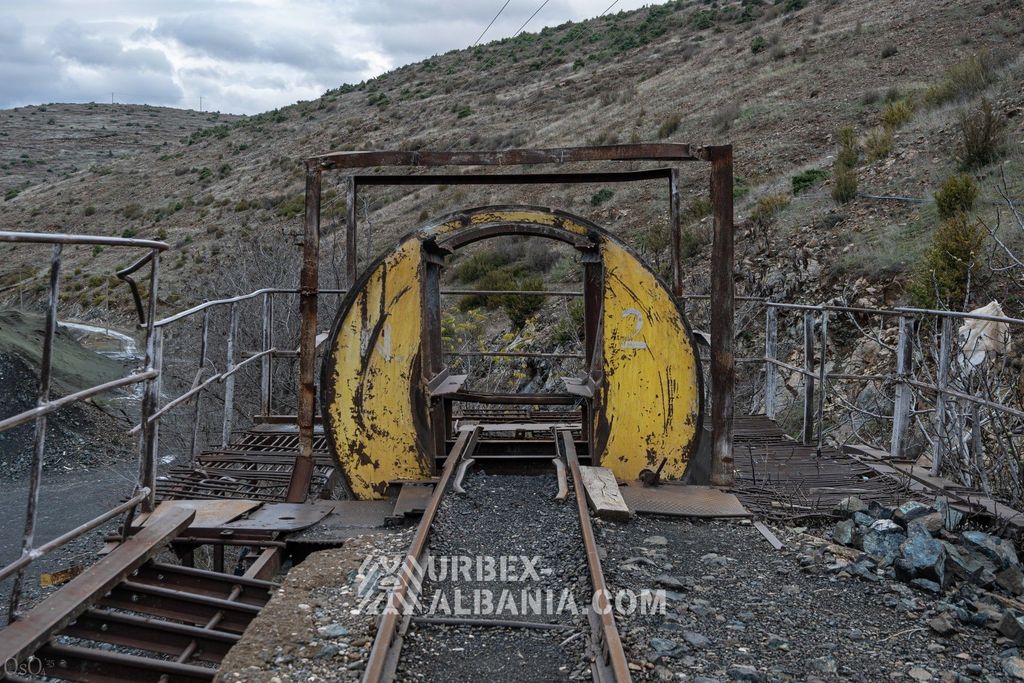
5. Another rotary dumper on the far side of the waste dump.
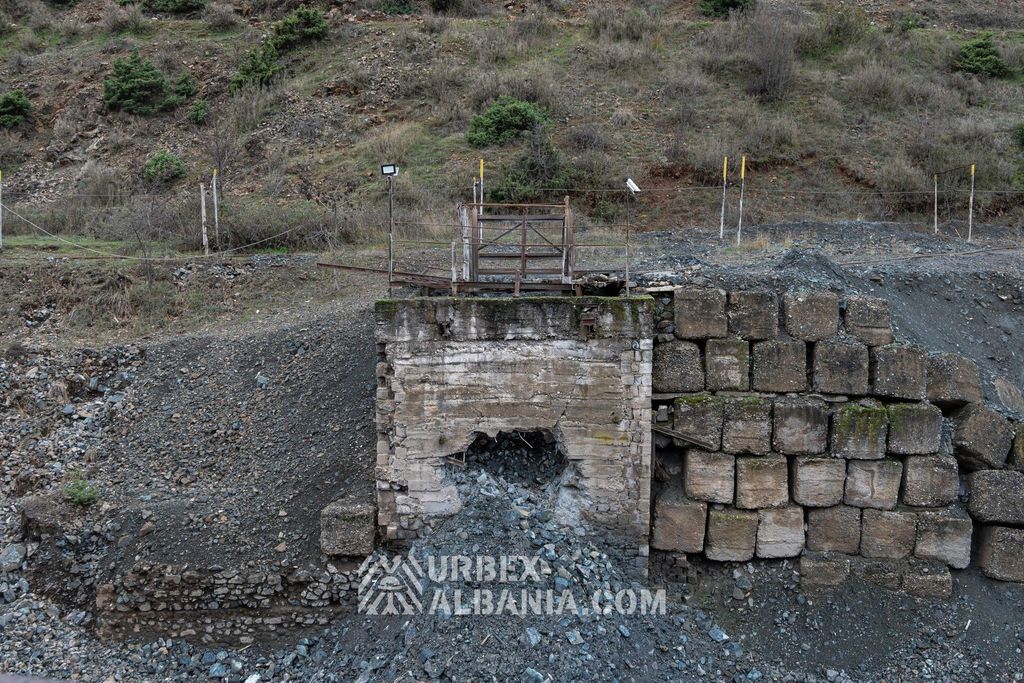
6. Let’s head toward the portal.
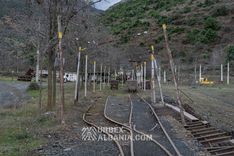
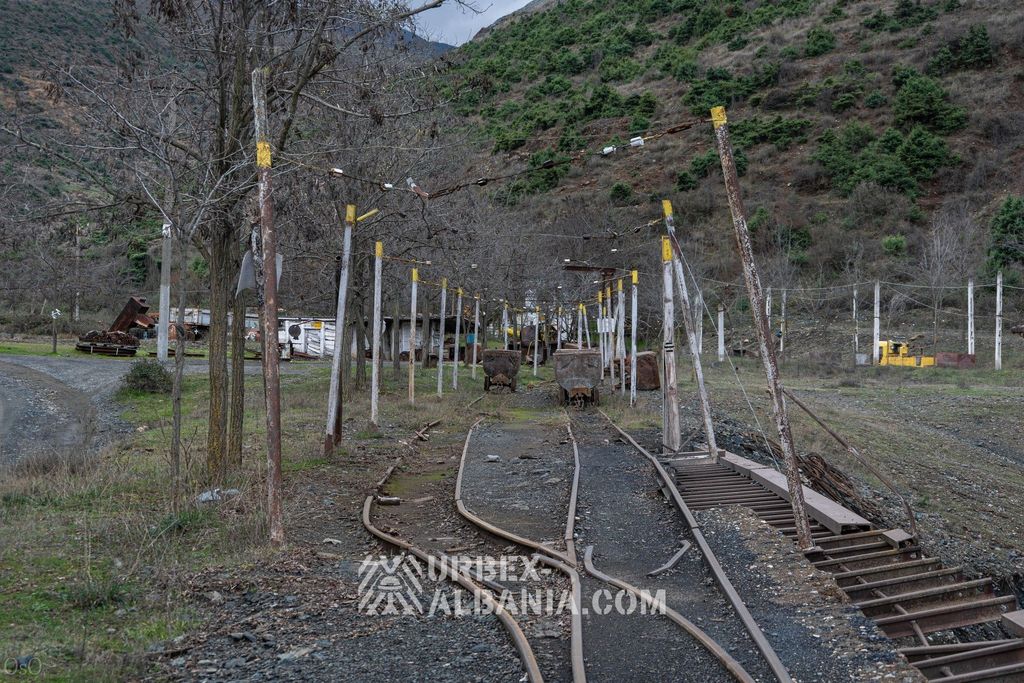
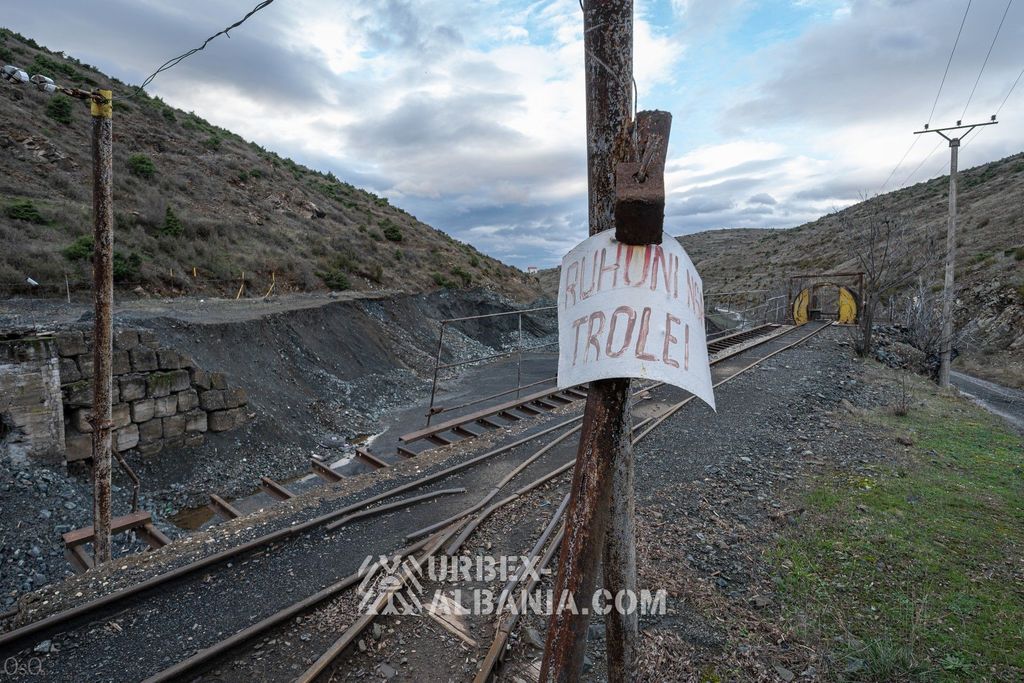
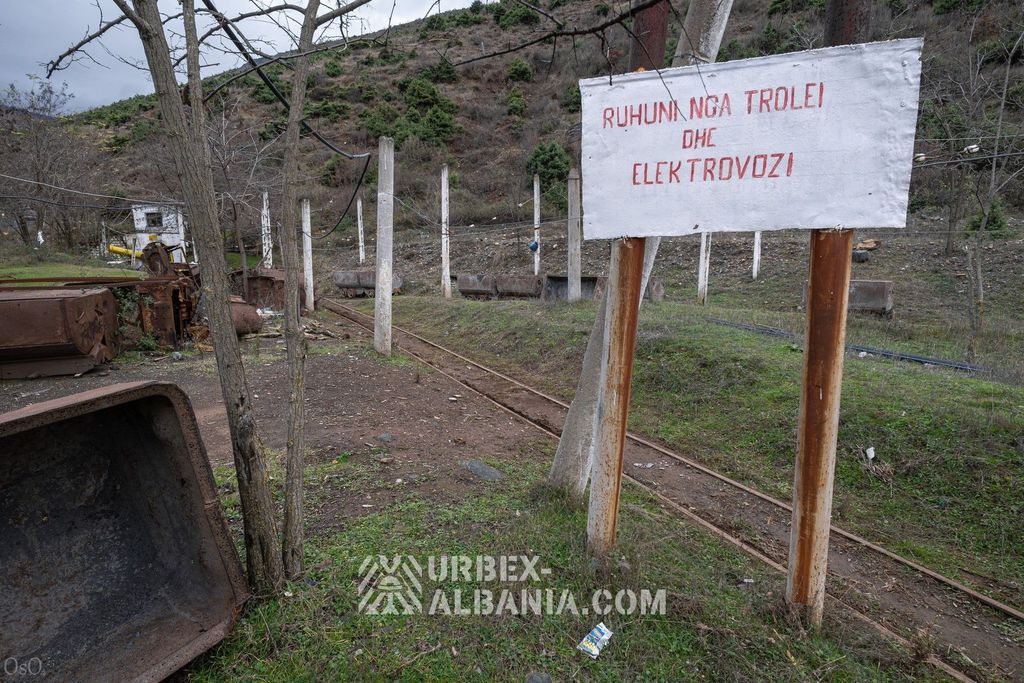
7. Ruhuni nga trolei — watch out for the trolley wire.
8. Ore cars.
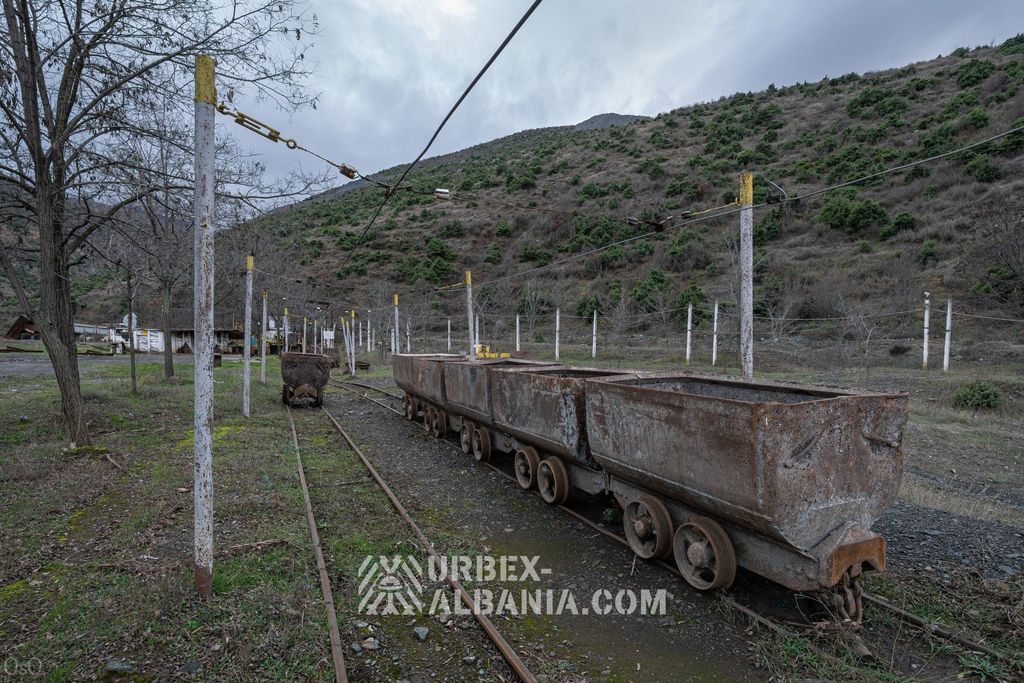
9. Push-pull.
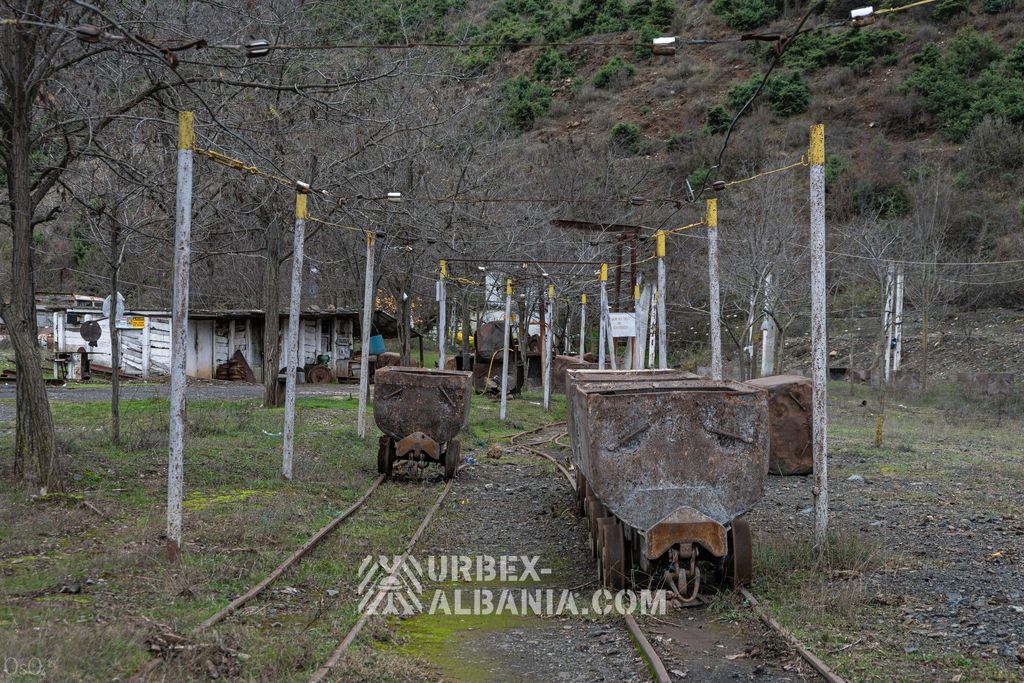
10. POV: you are the electric locomotive.
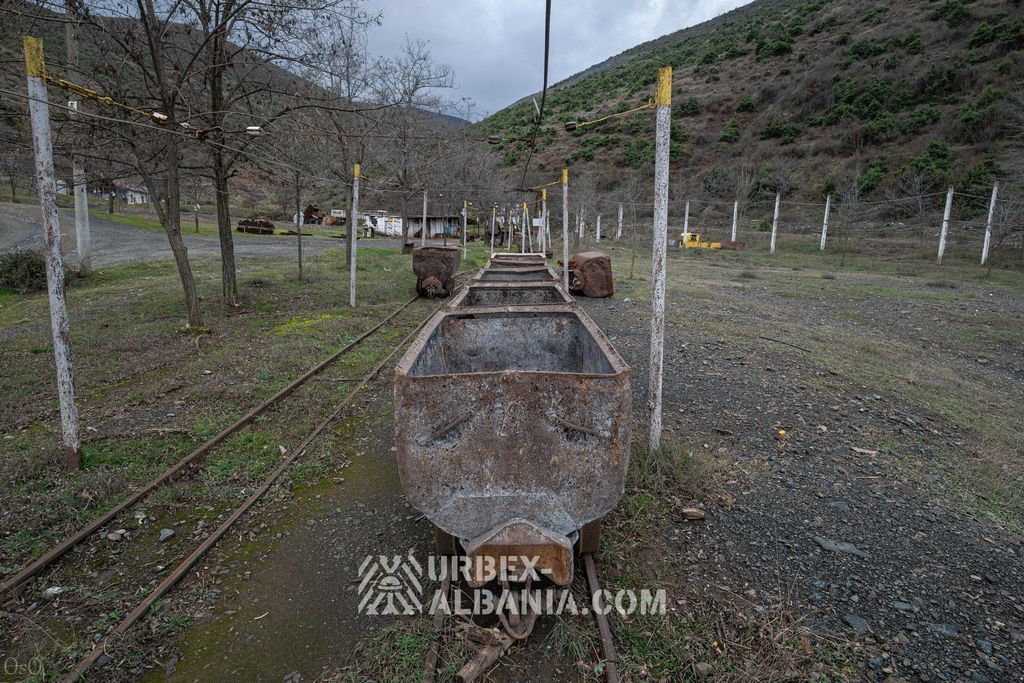
11. And here’s the electric locomotive itself.
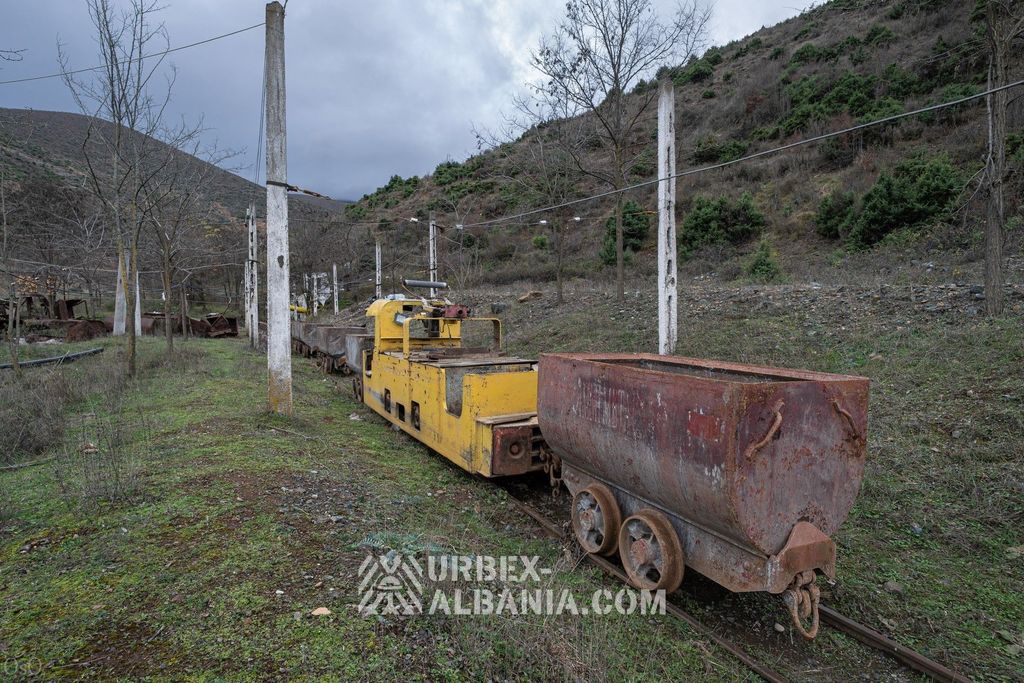
12. Pretty.
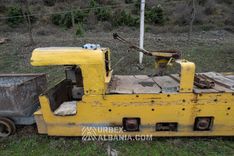
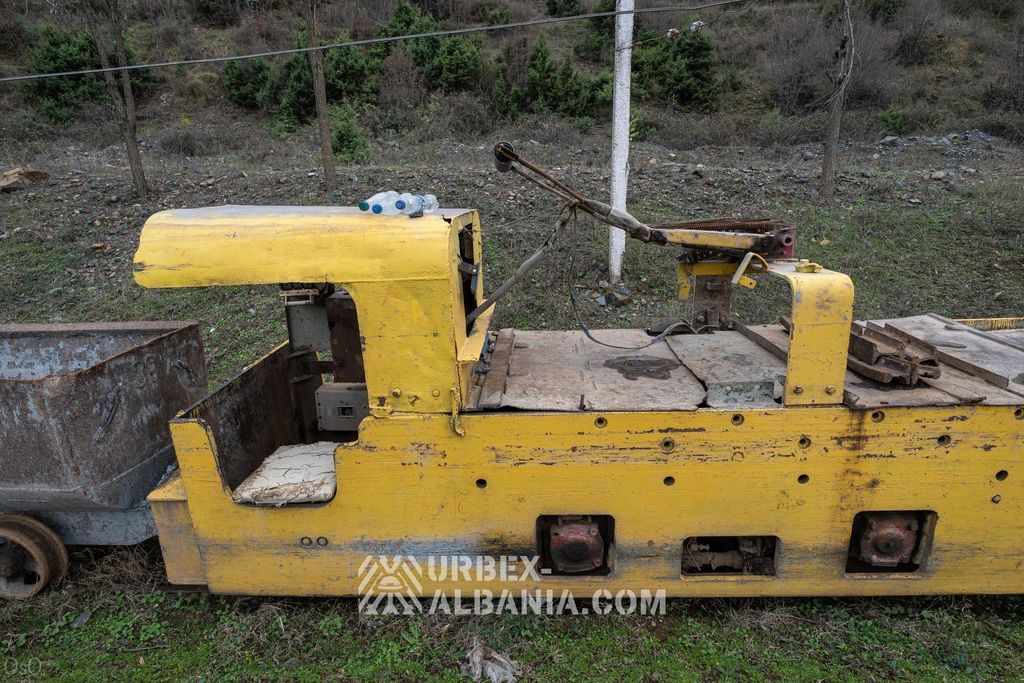
13. The pantograph is lowered, but it can be raised.
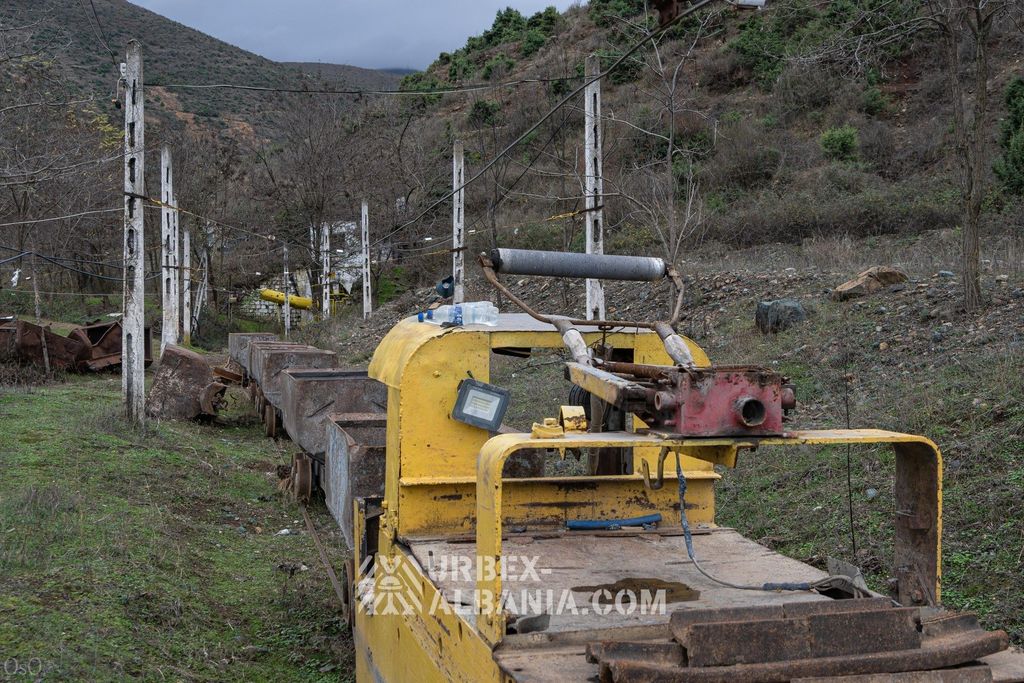
14. The cab. The locomotive won’t start — no power on the line.
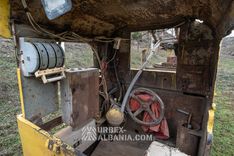
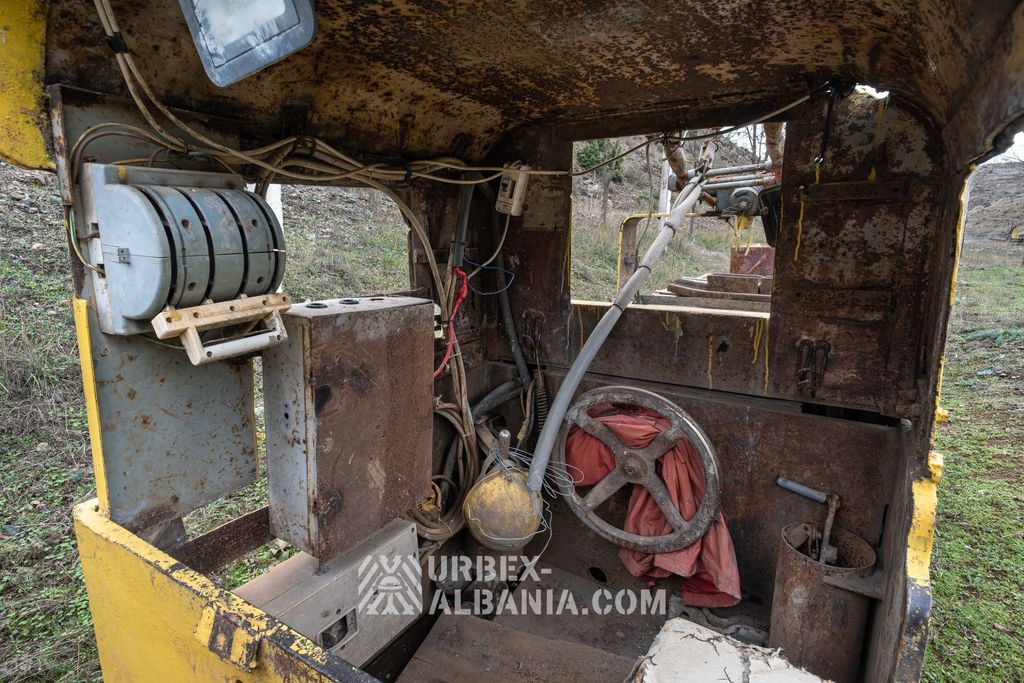
15. It will no longer haul ore cars behind it.
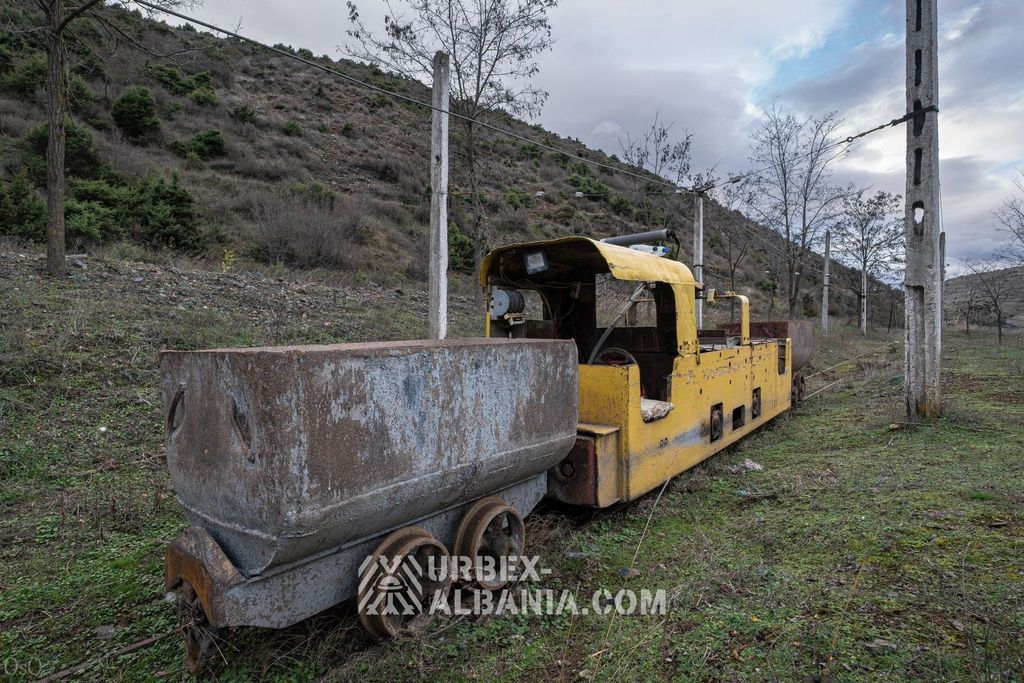
16. The portal is coming into view.
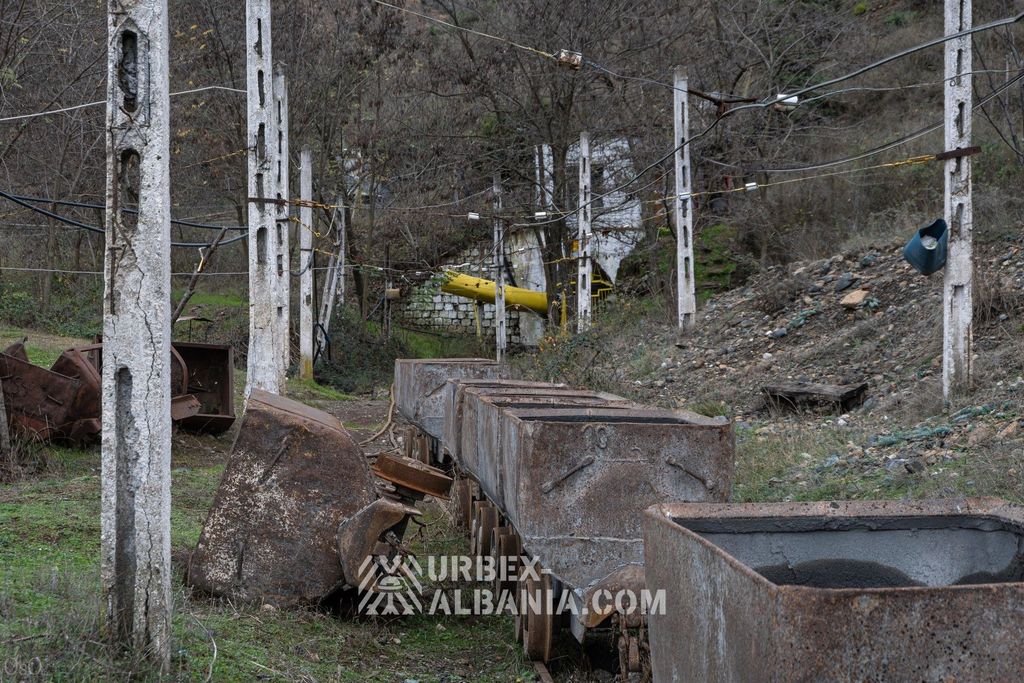
17. ELEKTROVOZI! You can feel the Soviet influence — the word almost certainly came from Russian :) Albanian has nothing etymologically close to this word.
18. Unloaded ore still sitting in the cars.
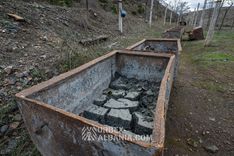
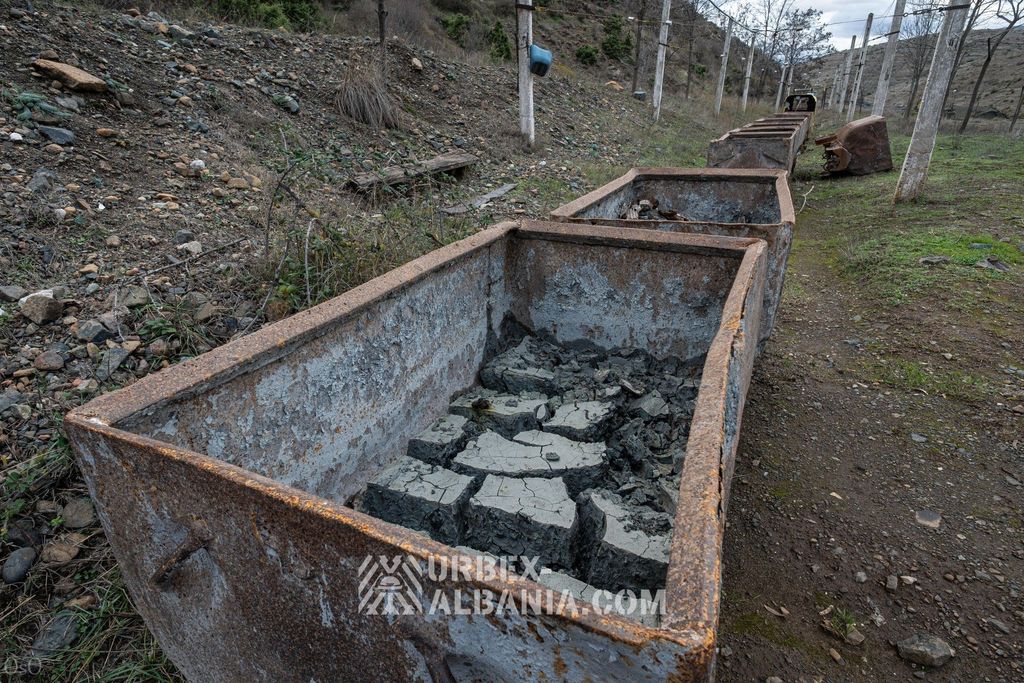
19. Broken ore cars lying beside the narrow-gauge track, now serving as a trash heap.
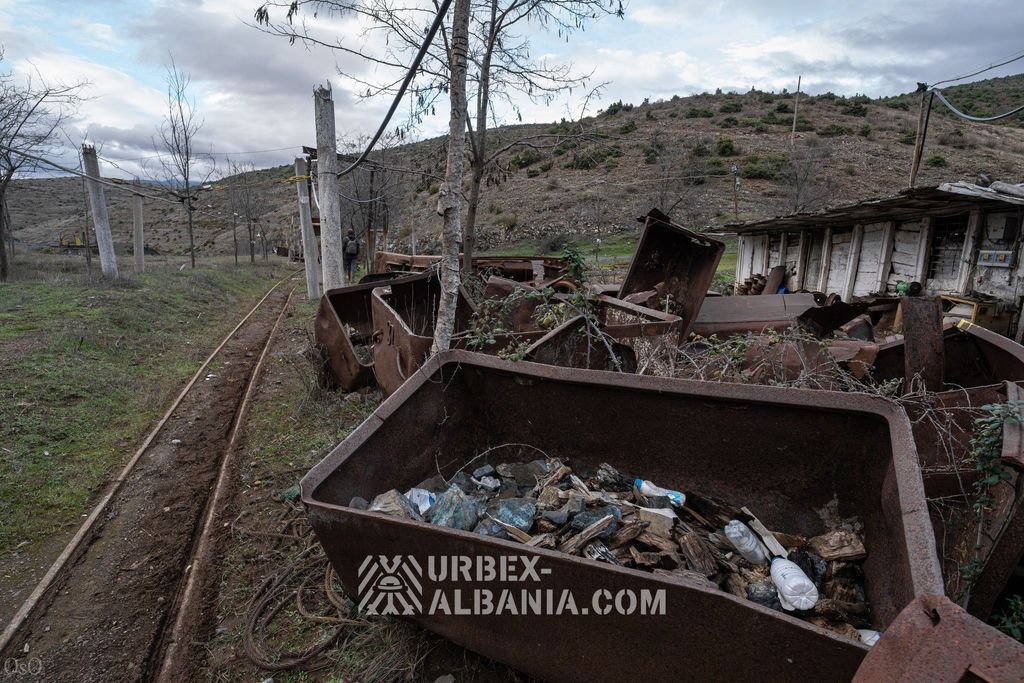
20. Scrap metal.
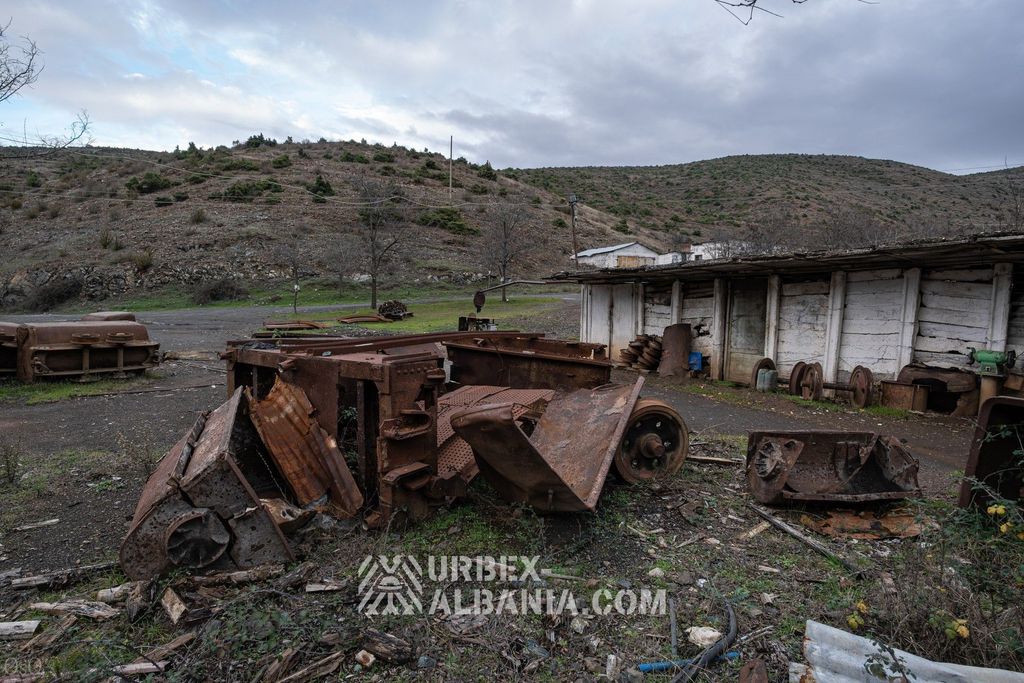
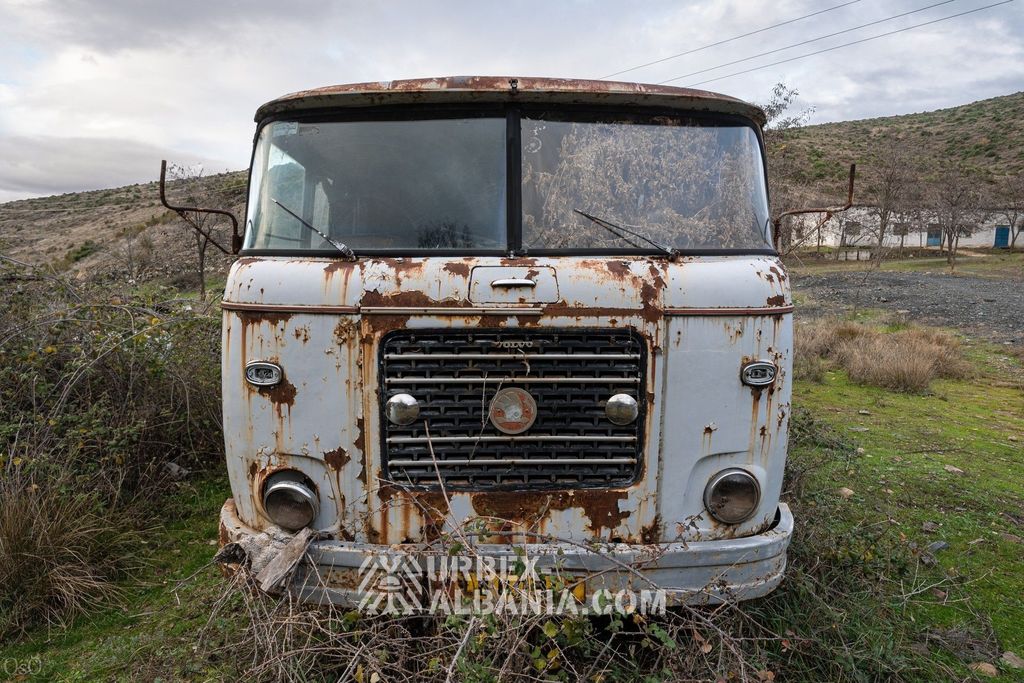
21. Nearby, a Škoda truck has grown into the blackberry bushes.
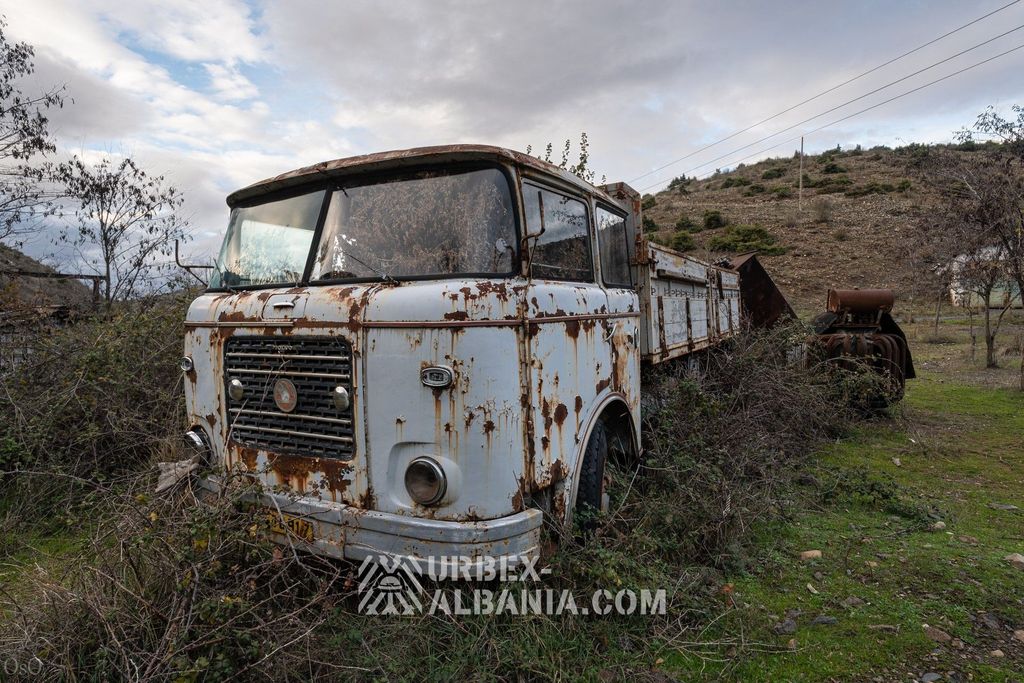
22. A bush in the driver’s seat.
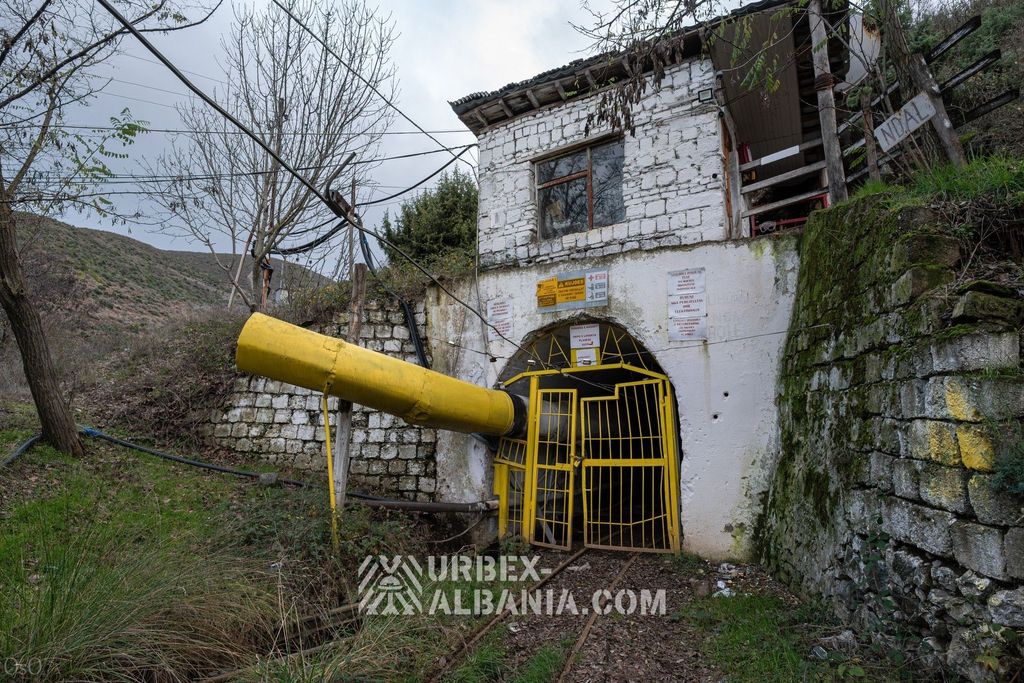
23. And here’s the portal, with the guard’s booth perched above it.
24. Beware of cats on site. If you see one, someone nearby is feeding it. This one had just finished eating.
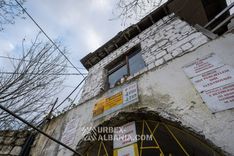
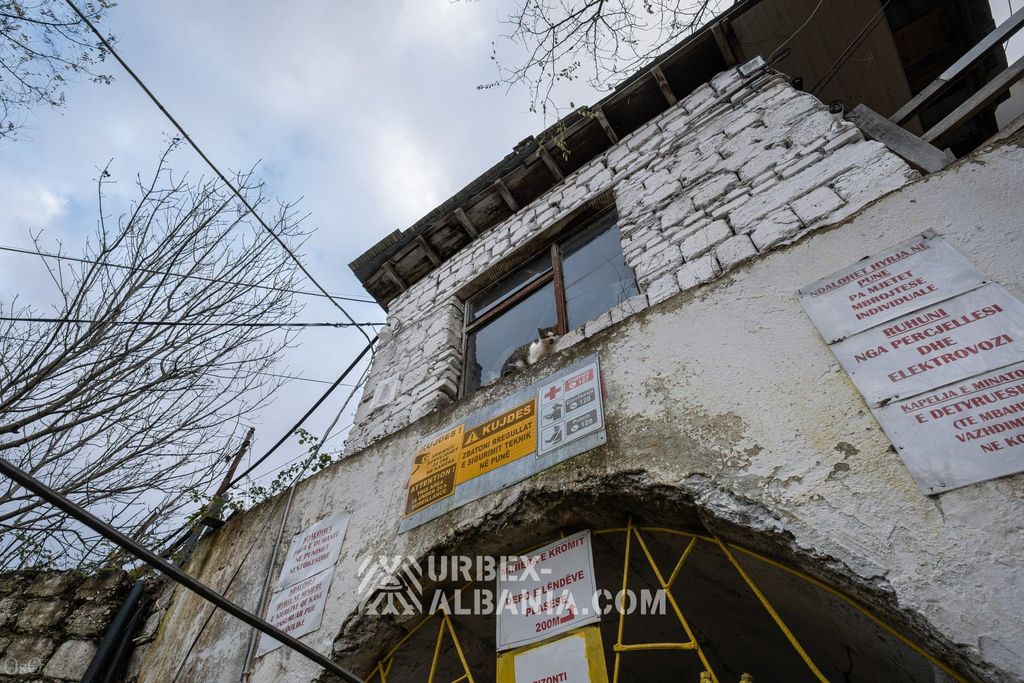
Although the gates had a padlock on them, they were bent so badly that you could easily squeeze between them — easily, that is, if you fit. My mate simply couldn’t make it through. I was already inside, he was still outside. Worried the trolley wire might be live, he carefully tried to climb over the top of the gates without touching it. I’m hanging on the gates trying to help him, when suddenly I see a guy on a moped pulling up to the portal. He clearly wasn’t expecting to find strangers and stared at us in bewilderment. We had to climb back out and go talk to him. He turned out to be the mine’s security guard, returning to his booth above the portal with a shopping bag. After chatting with him about the mine, I asked if he’d let us take a look inside — but he said no. We had to leave without seeing the mine itself.
Part 2. A Successful Entry.
A couple of months later, we had guests from China and Norway — which gave us a good reason to revisit the mine. This time we came at night and walked up to the site on foot. The guard had learned his lesson from our first encounter and taken precautions. But he didn’t have many resources, so he leaned a rattling piece of scrap metal against the gates, wedged a stick between the leaves, and stationed a half-deaf dog somewhere far away. We squeezed through the gates and went in to explore the mine.
25. This mine was worked from several levels, with the most interesting parts starting at 650 metres and below. The levels above were driven almost entirely by hand. Level 650 is conveniently located at surface level and was used for ore haulage. Originally, descent to the lower levels was via inclined shafts (at around 30°). A vertical shaft was later sunk from 650 down to 500, connecting three levels. During our exploration it turned out the lowest level was flooded — and above the waterline, an invisible surprise was waiting for visitors, but more on that later.
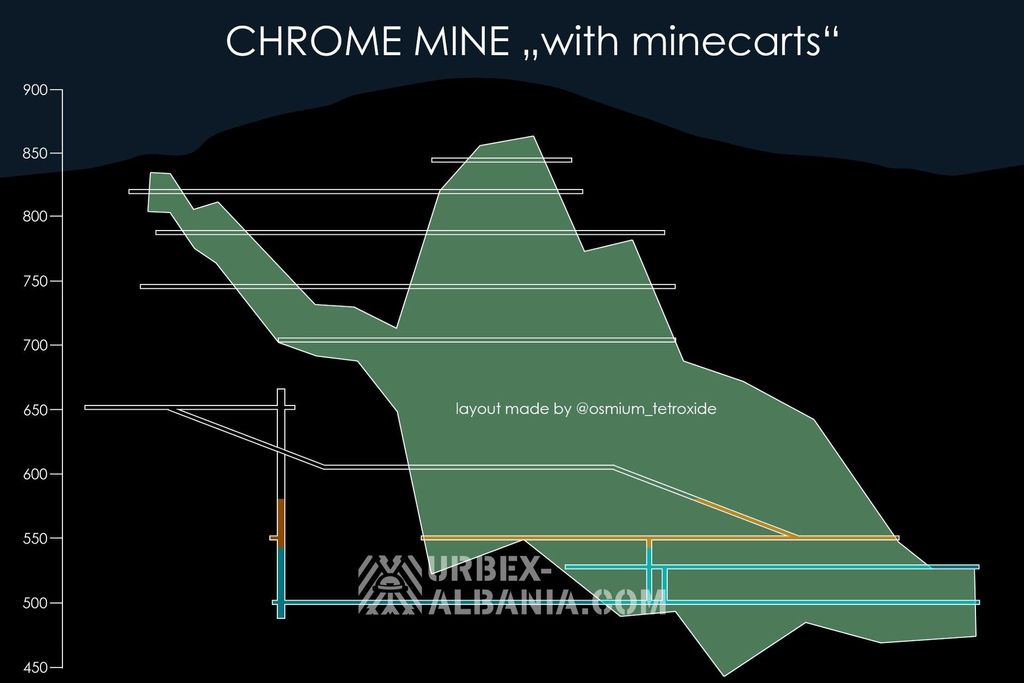
26. Level 650 is quite small — only about a kilometre of walking. Here’s the junction in front of the shaft station.
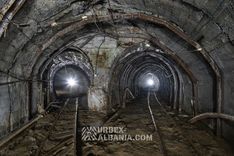
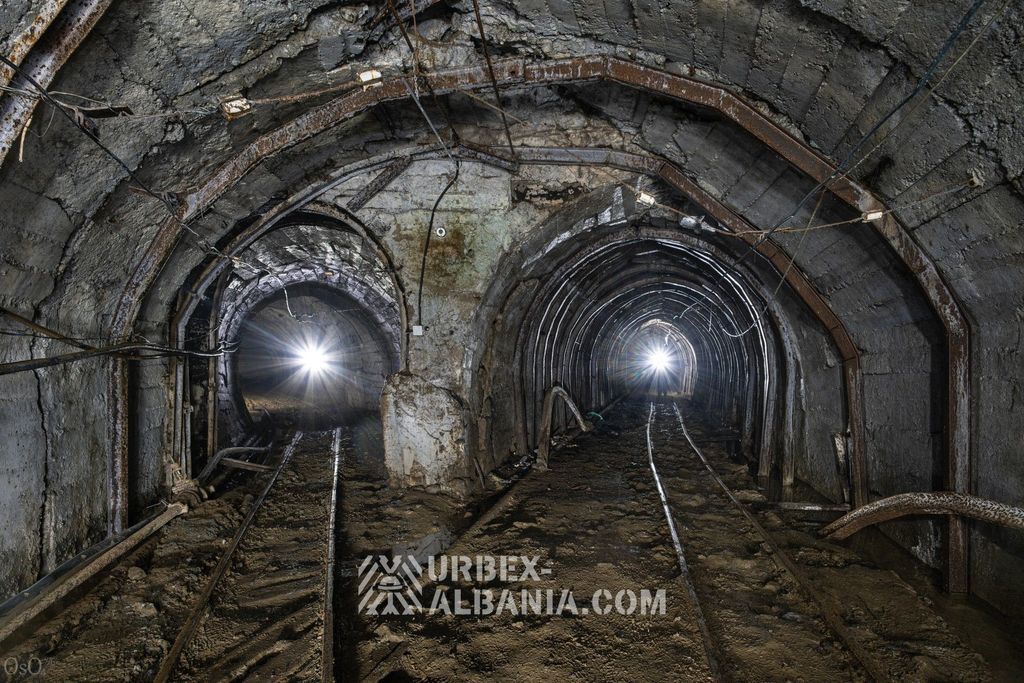
27. We’ve arrived at the shaft station. One cage is in place, the other is somewhere below.
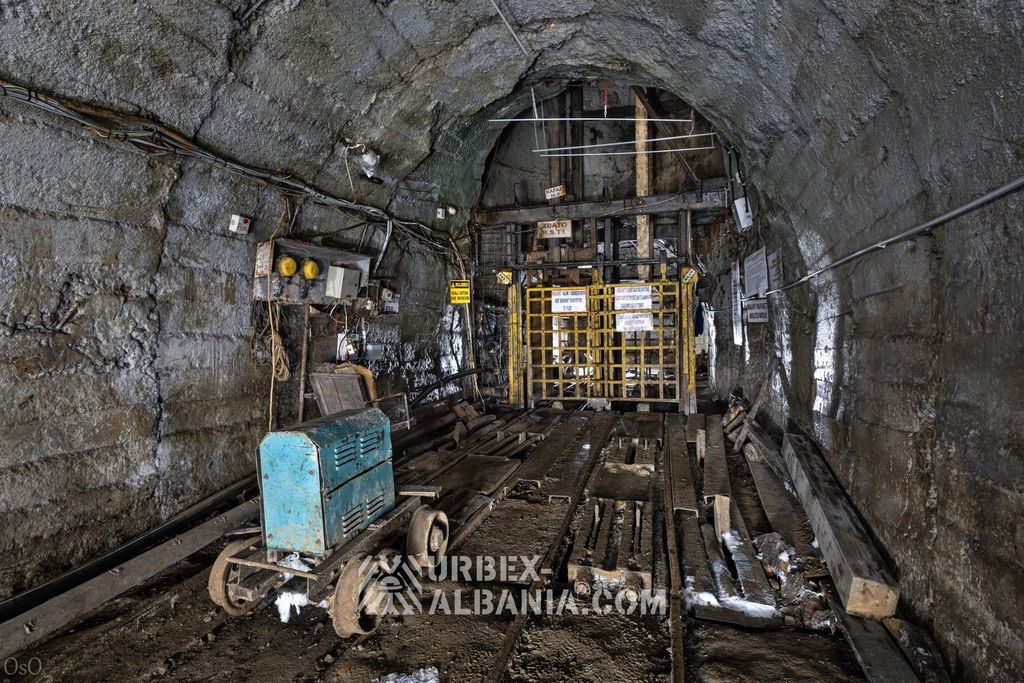
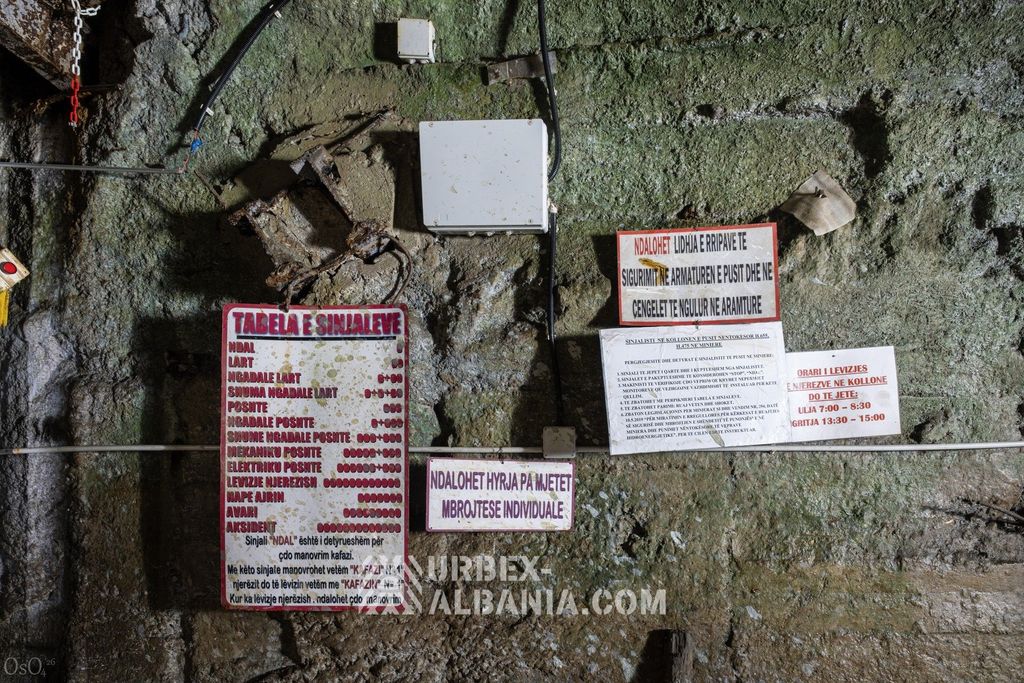
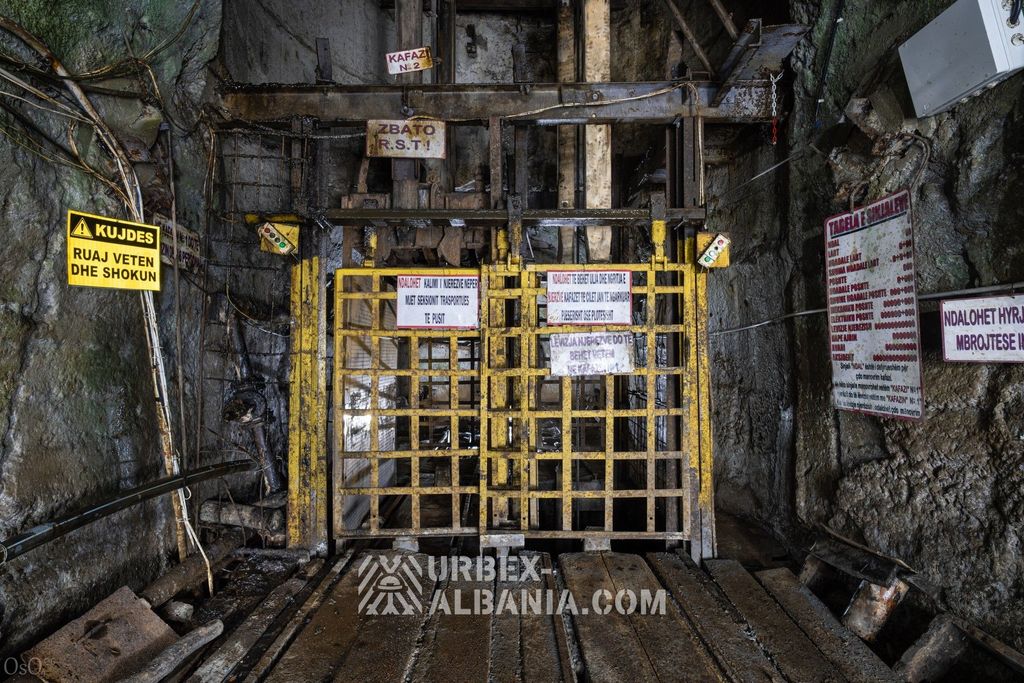
28. Signs on the walls: signal codes, safety rules, shift descent and ascent times.
29. The shaft attendant’s comfortable chair.
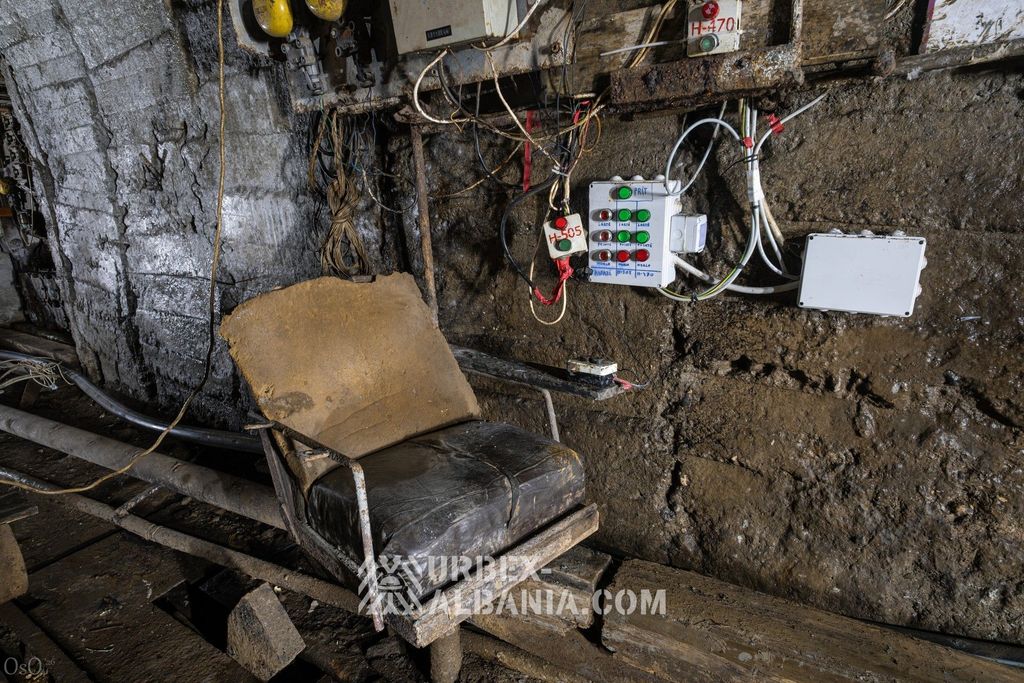
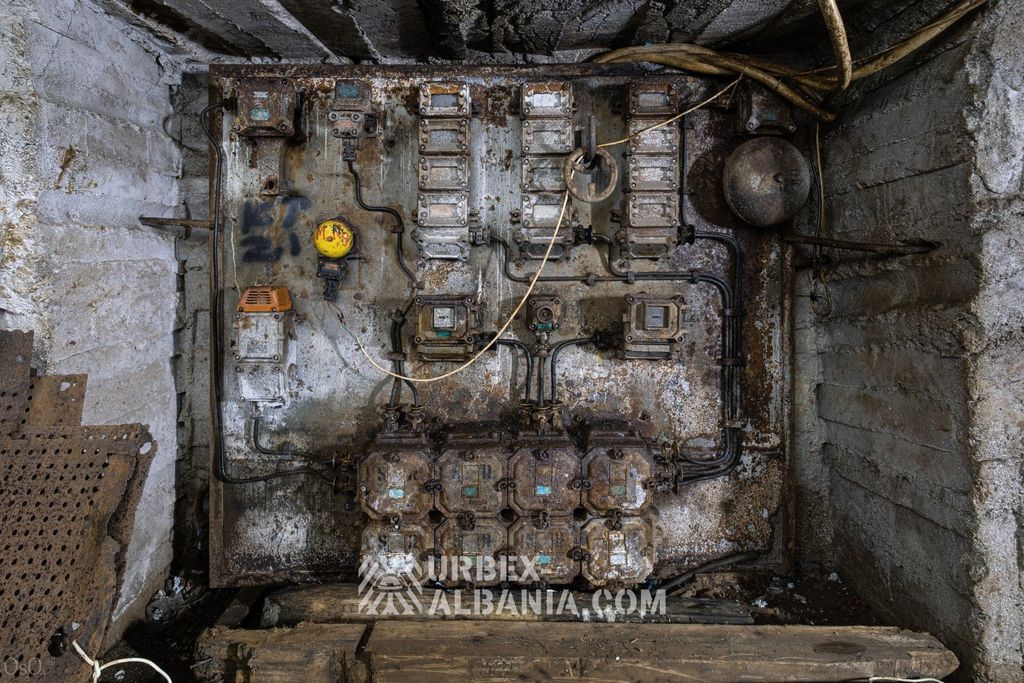
30. A fearsome electrical automation panel.
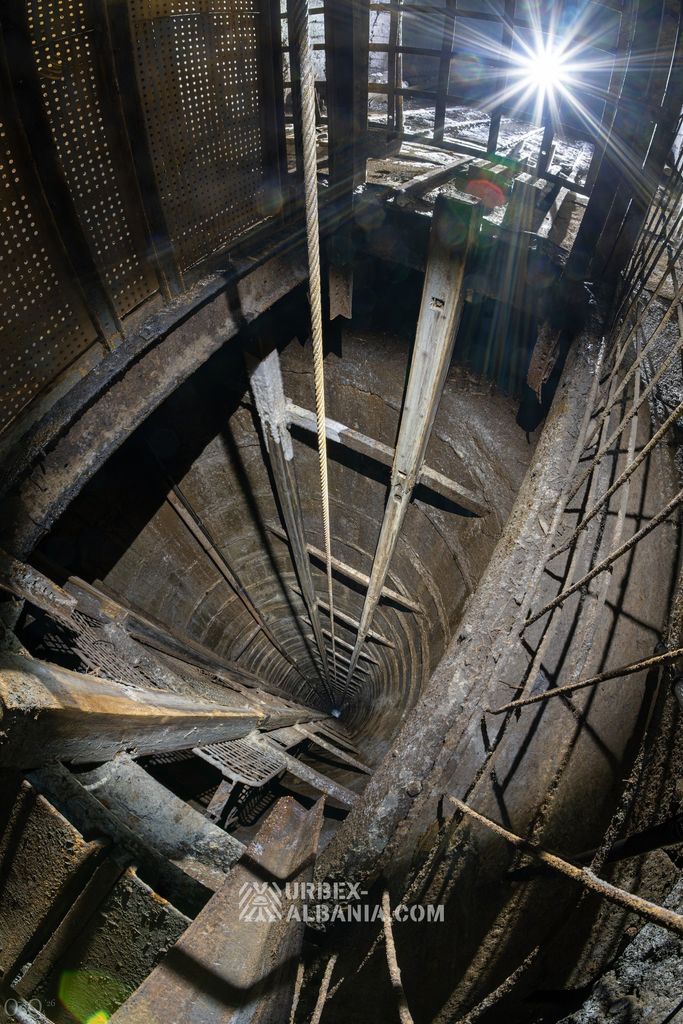
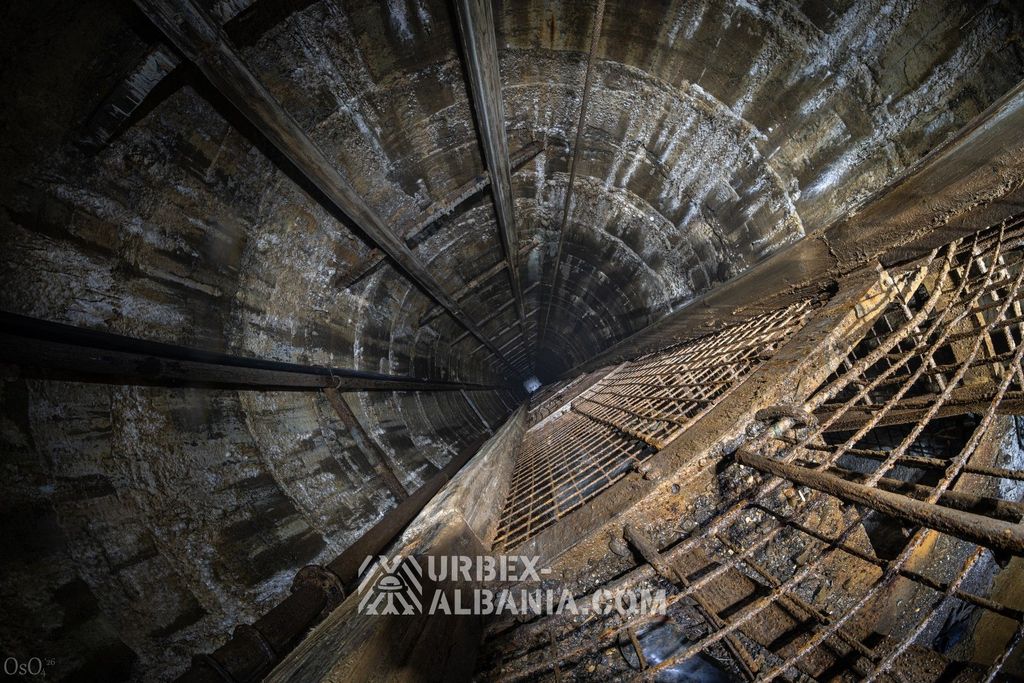
31. Looking down the shaft.
32. We opened the cage.
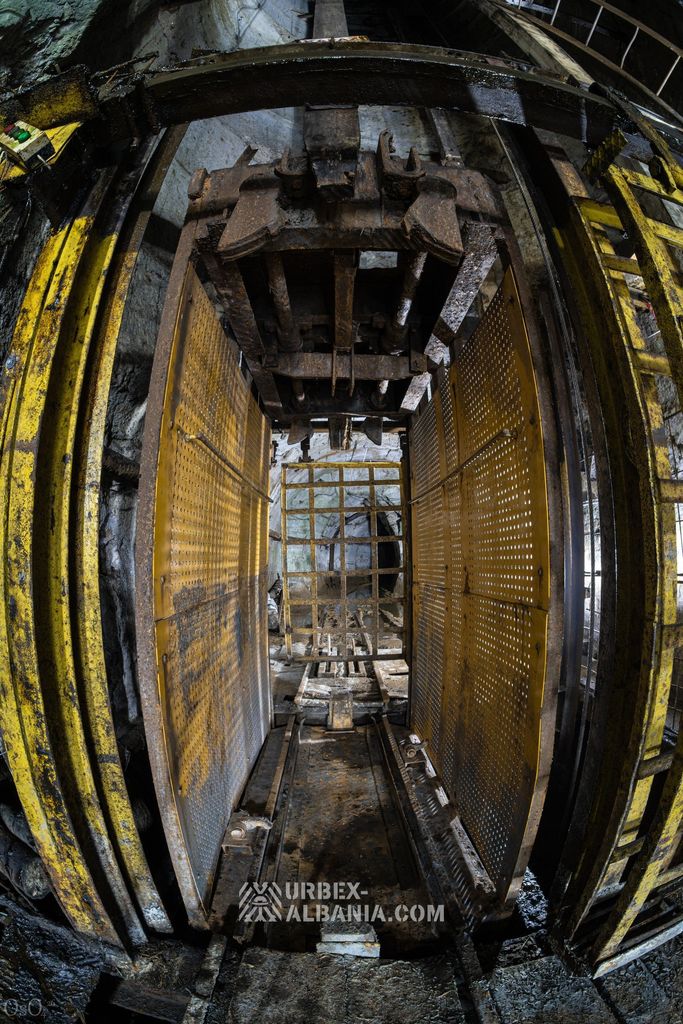
33. If there’s a shaft, there’s a winding engine. Let’s head to the engine room.
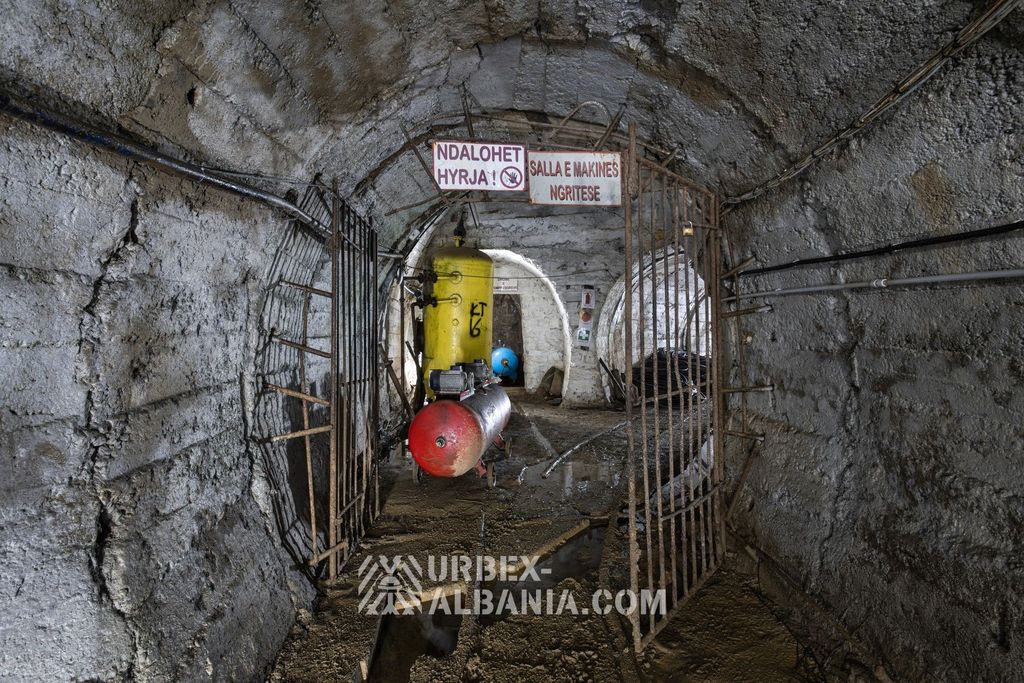
34. The compressor room.
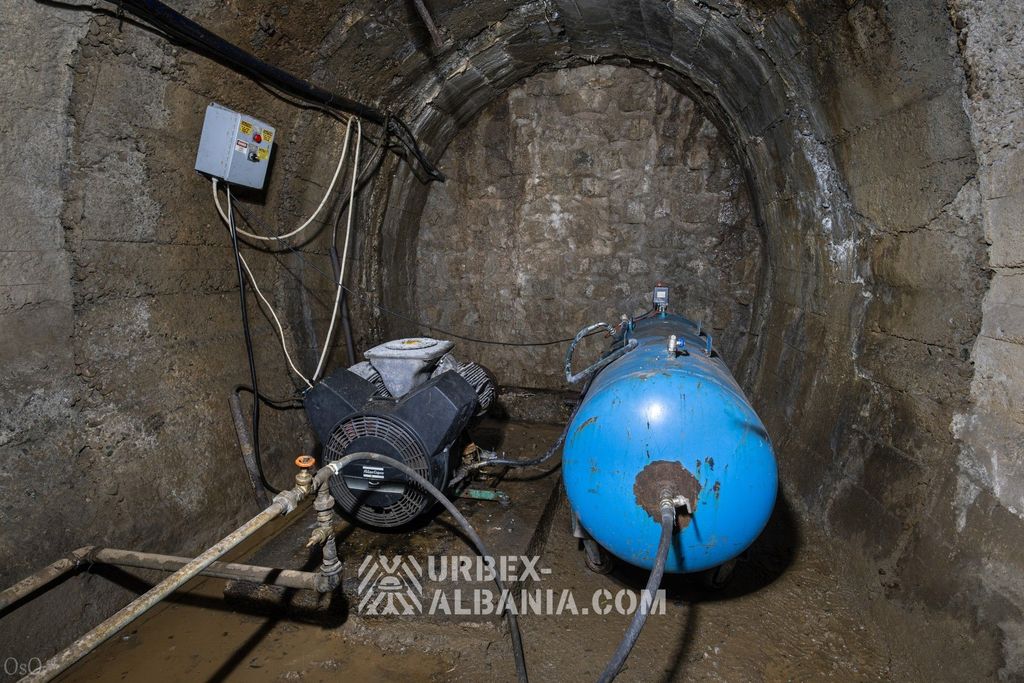
35. Another compressor and a compressed air receiver.
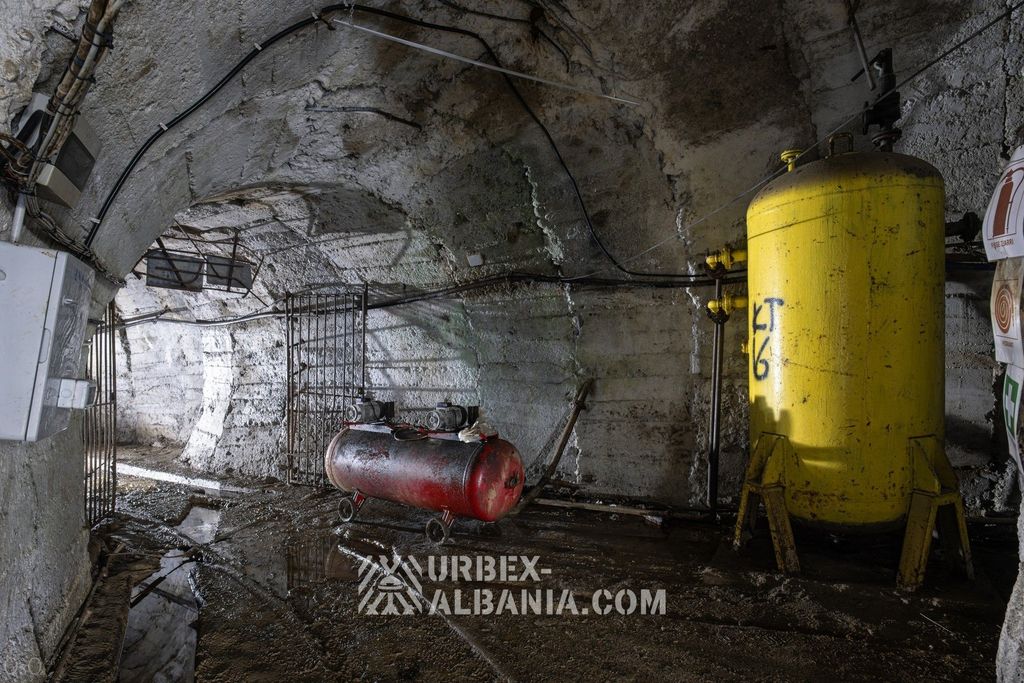
36. Entering the engine room.
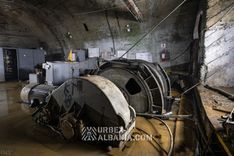
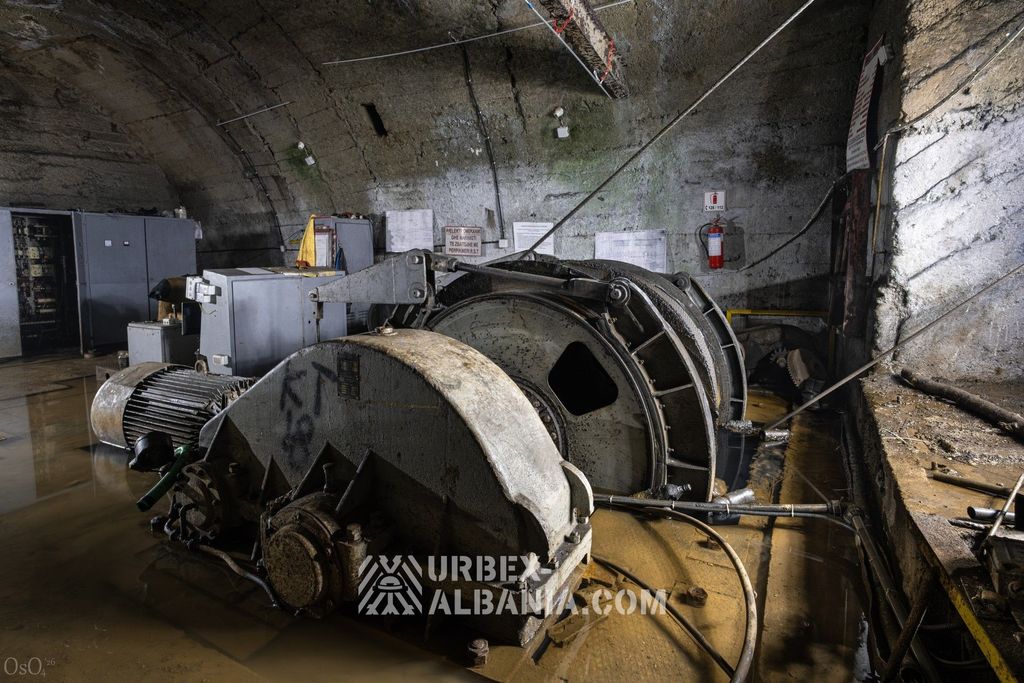
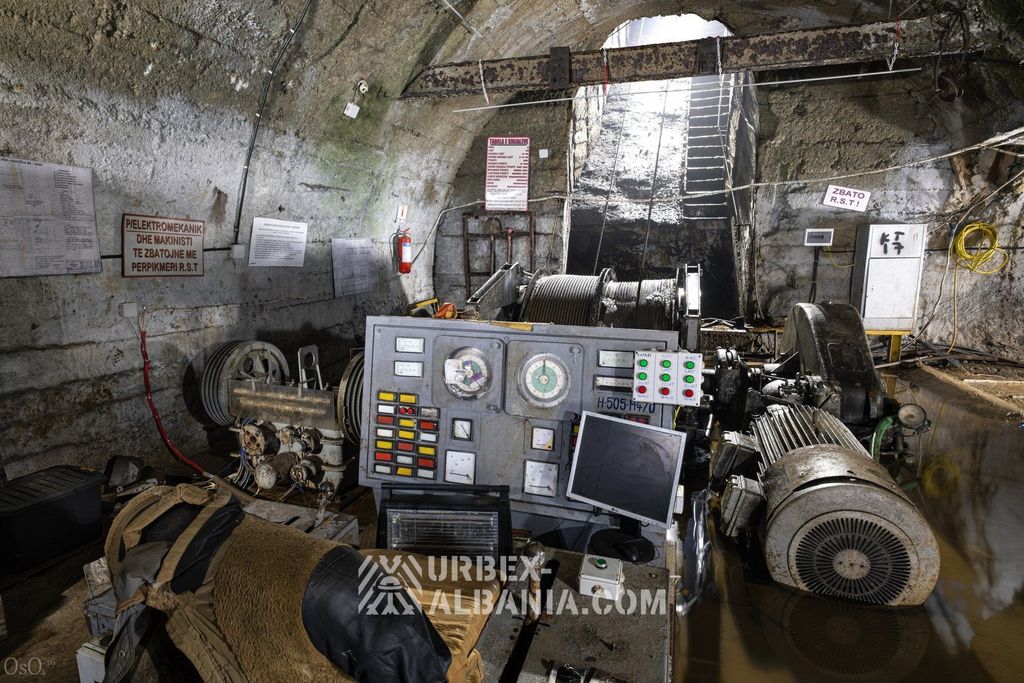
37. Beautiful! A partially flooded hall with all the equipment still intact.
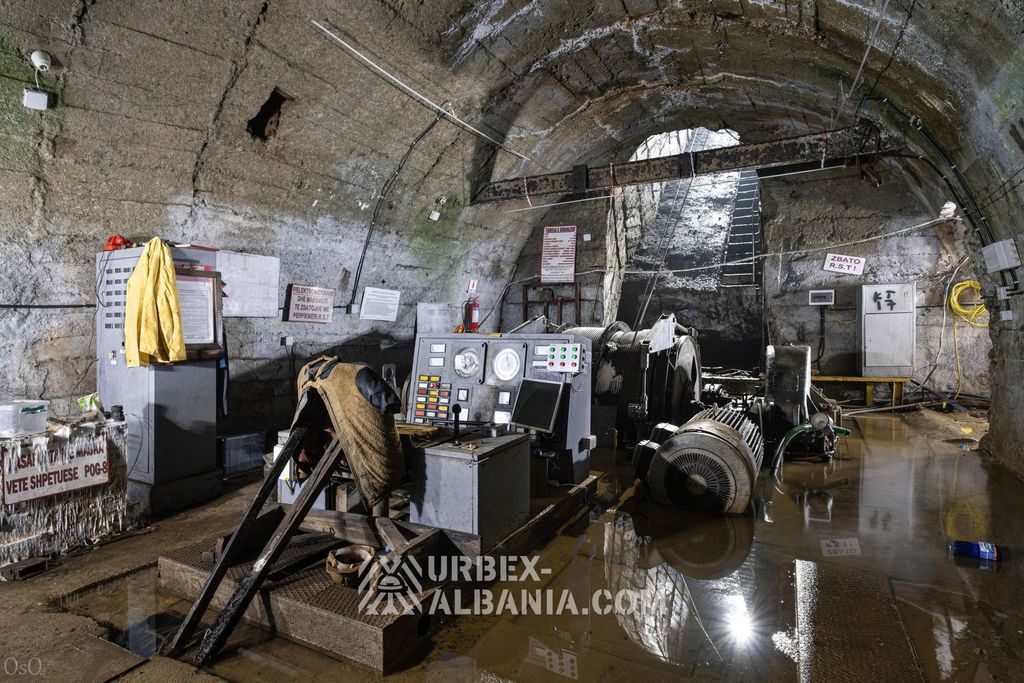
38. A cabinet of POG-8 self-rescuers.
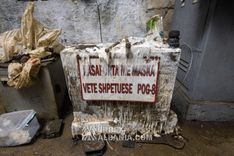
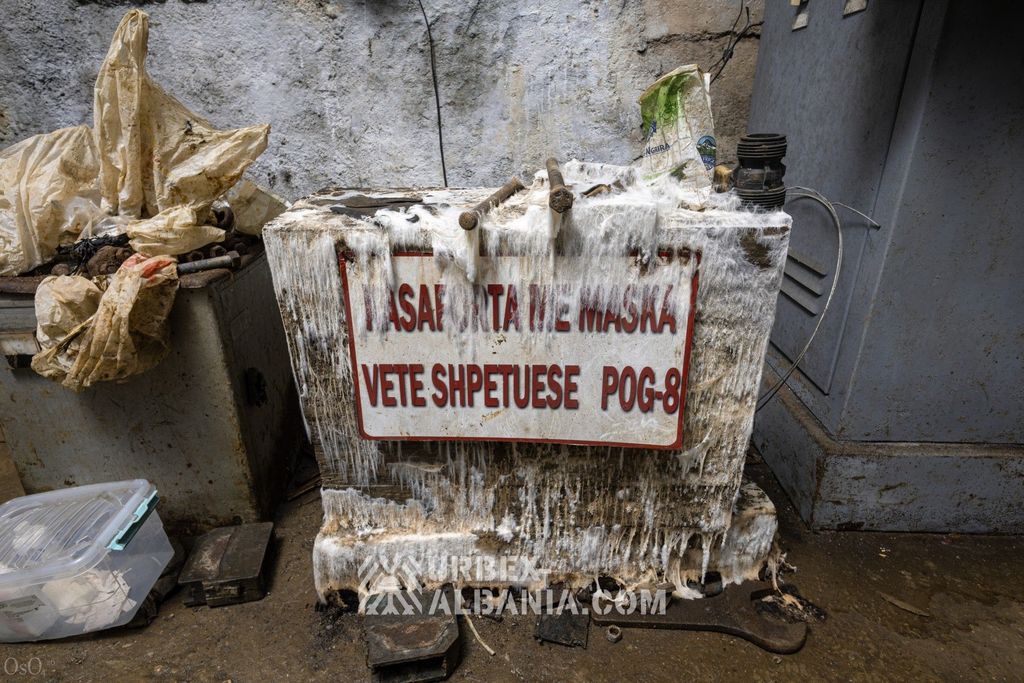
39. Thoroughly moulded over.
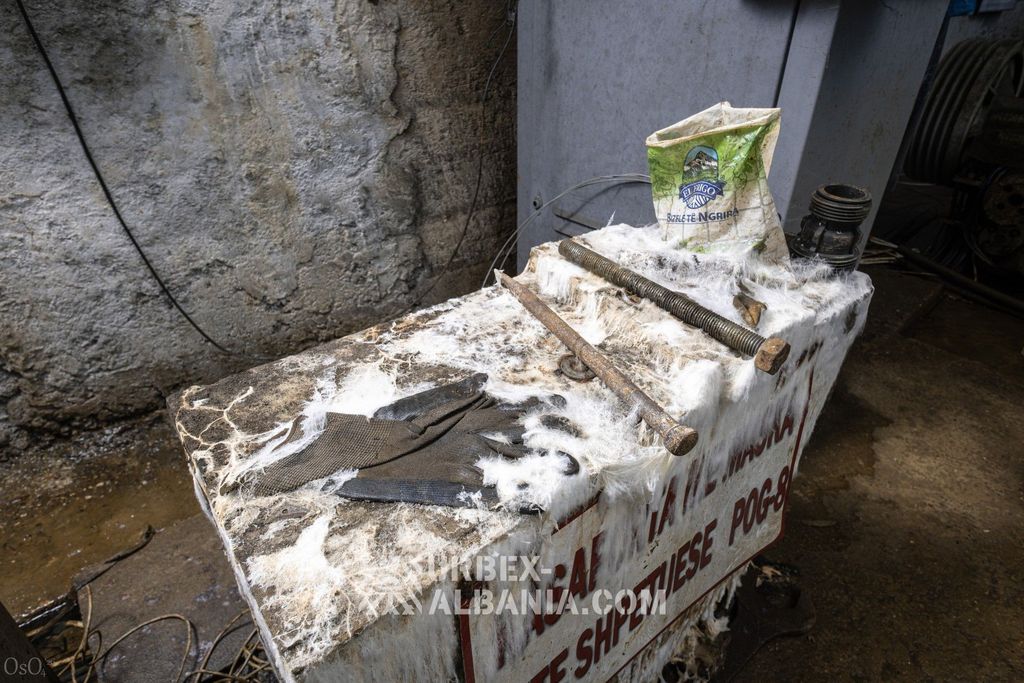
40. The winder operator’s workstation.
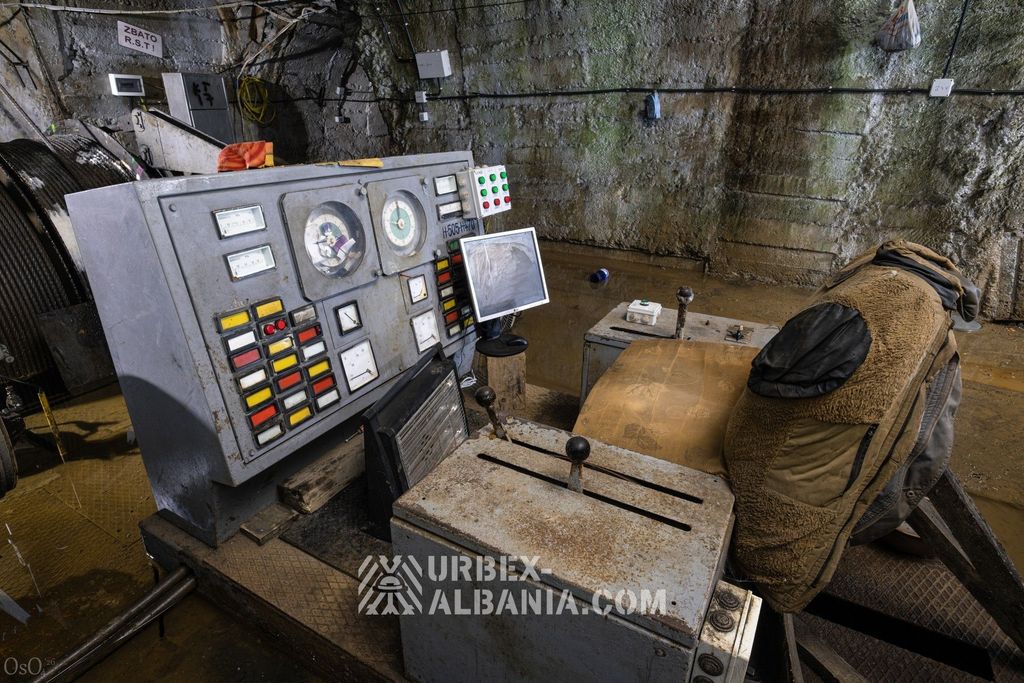
41. The backrest is propped up with planks, draped in some kind of sheepskin coat. A heater at the feet. Pure comfort!
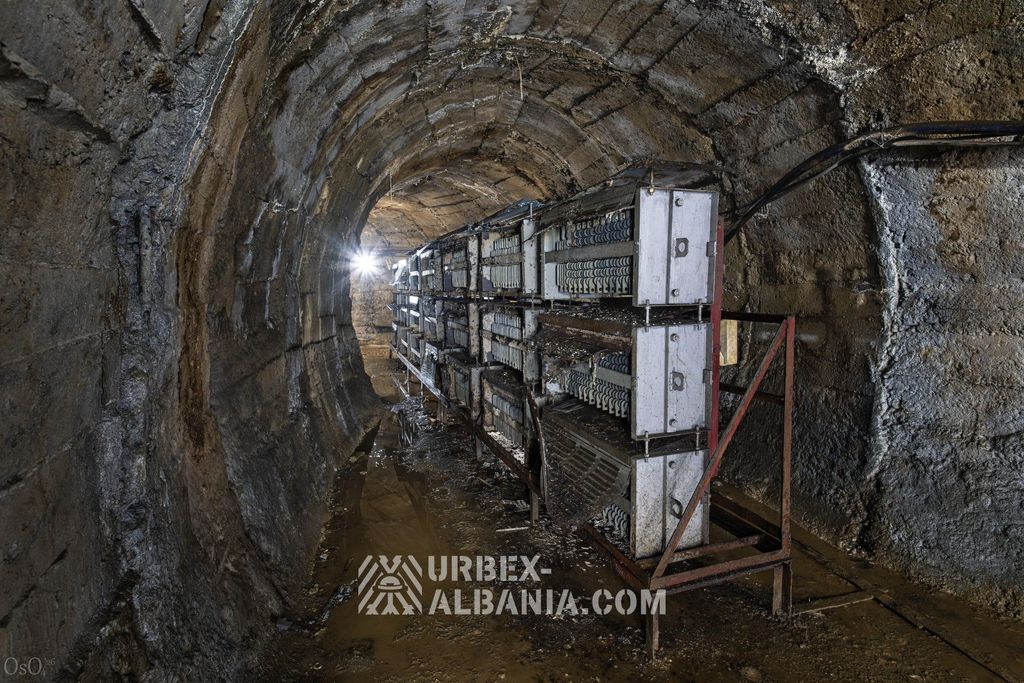
42. A rack of starting rheostats for smoothing the start and stop of the winding engine motors.
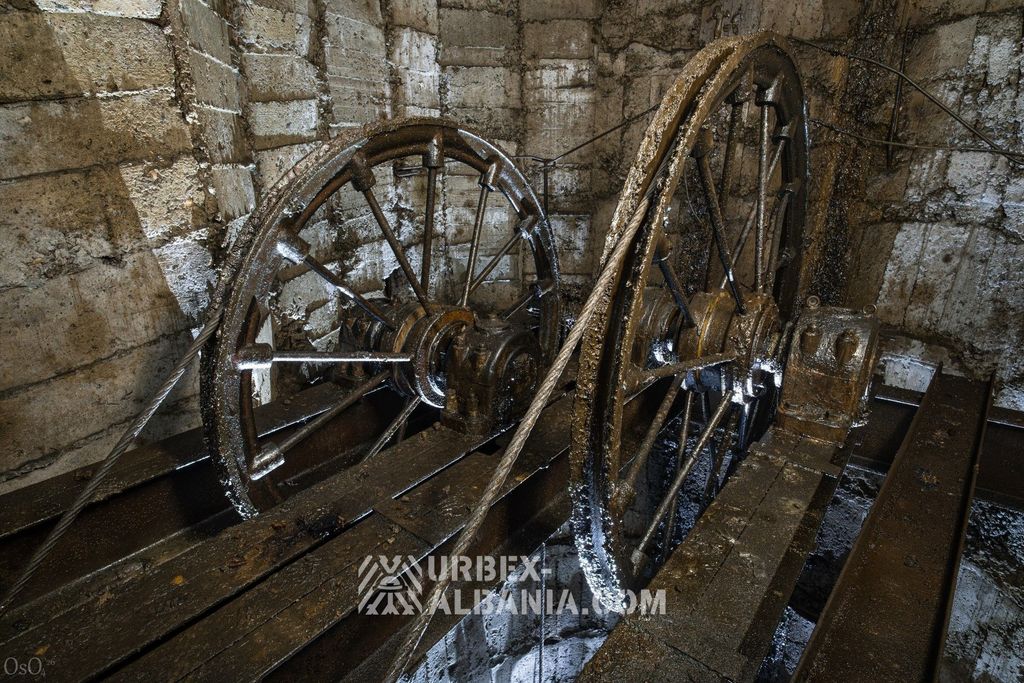
43. Climbing into the inclined gallery where the cables run from the drum. Sheave wheels!
44. View downward from the sheave wheels.
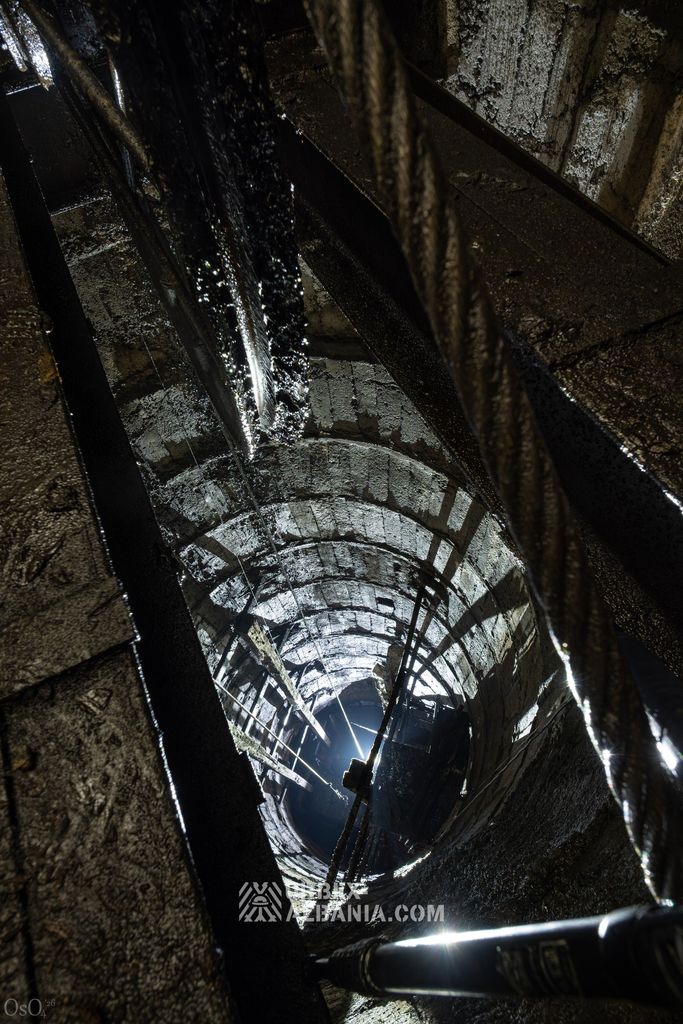
45. Back at the shaft station. A fun safety reminder: Kujdes! Ruaj veten dhe shokun. — Watch out! Look after yourself and your mate.
46. I start descending the shaft with the gas analyser running. One of the landings near the top of the descent. The ladder compartment is built quite solidly — they didn’t skimp on metal.
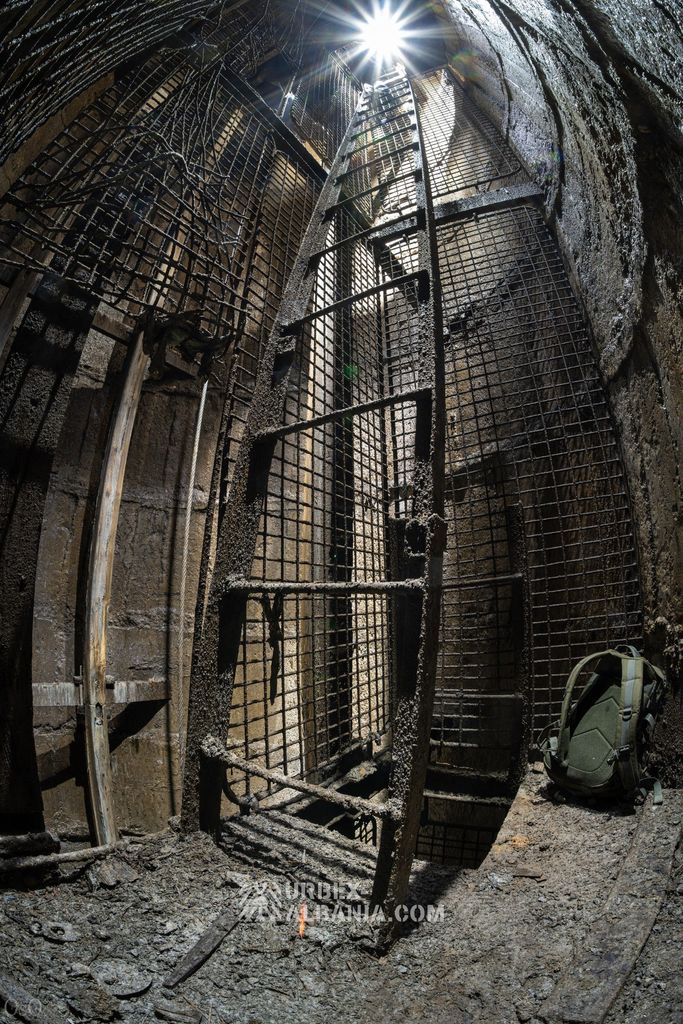
I go first since I have the gas analyser. I check it at every landing. After about 50 metres of descent I notice oxygen levels starting to drop — from the normal 20.9% down to 20%. I slow my pace and continue down a few more ladders. The primary alarm triggers, already at 19%. I shout up to the others not to rush down, slow my own progress but keep moving. One rung, then a glance at the analyser. And at one point I see that over the span of just 4 metres, oxygen has dropped by another percent — the analyser is seriously alarmed now.
47. I shine my light downward and peer into the very bottom. No cage visible — just water rippling below. It looks like the groundwater has filled the shaft like a pool, and the rotting timber has created another pool, invisible and deadly, of carbon dioxide. Well, that’s that then. I climb back up a couple of flights to where there’s a convenient gap in the shaft ladder enclosure to take a photo.
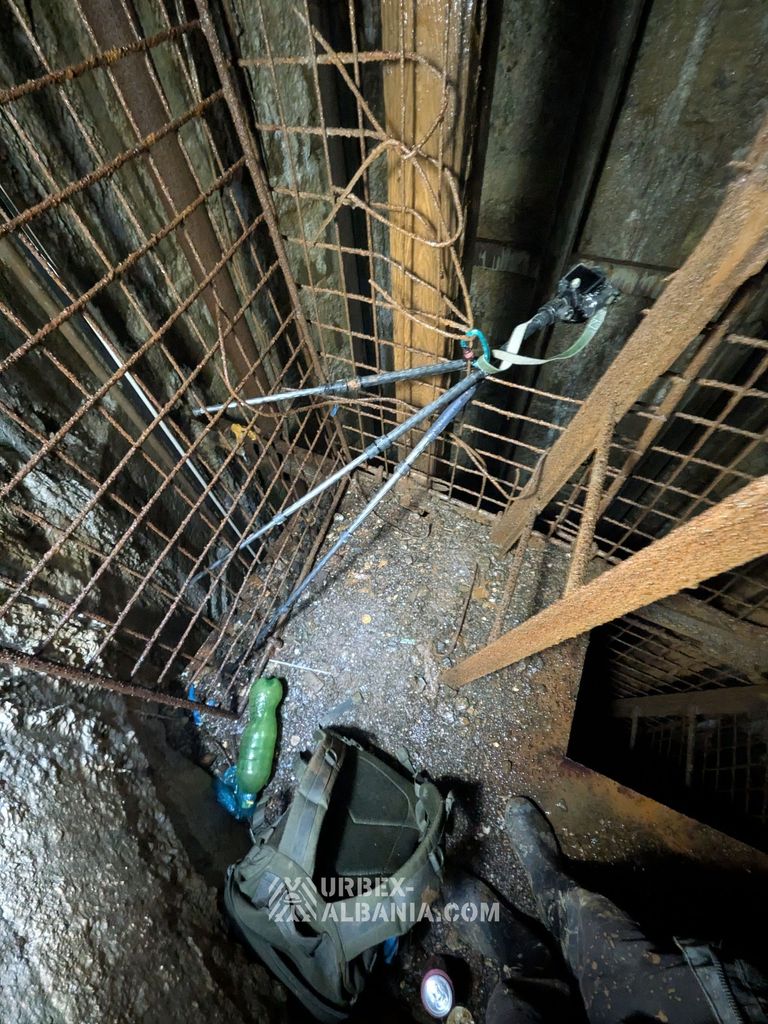
48. Like this one. Chokedamp. Time to head back.
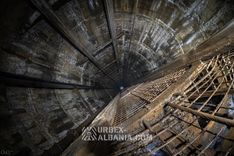
On the way to the shaft we’d noticed a tunnel branching off to the side. The mine map suggests there should be an inclined shaft there. Let’s go check.
49. And so there is. Here’s the winding drum. An inclined shaft is an older, more primitive technology compared to a vertical one. Descending along an inclined gallery takes longer, maintenance is harder — but it’s cheaper to excavate. So for smaller mines or low-tech operations, the approach is justified.
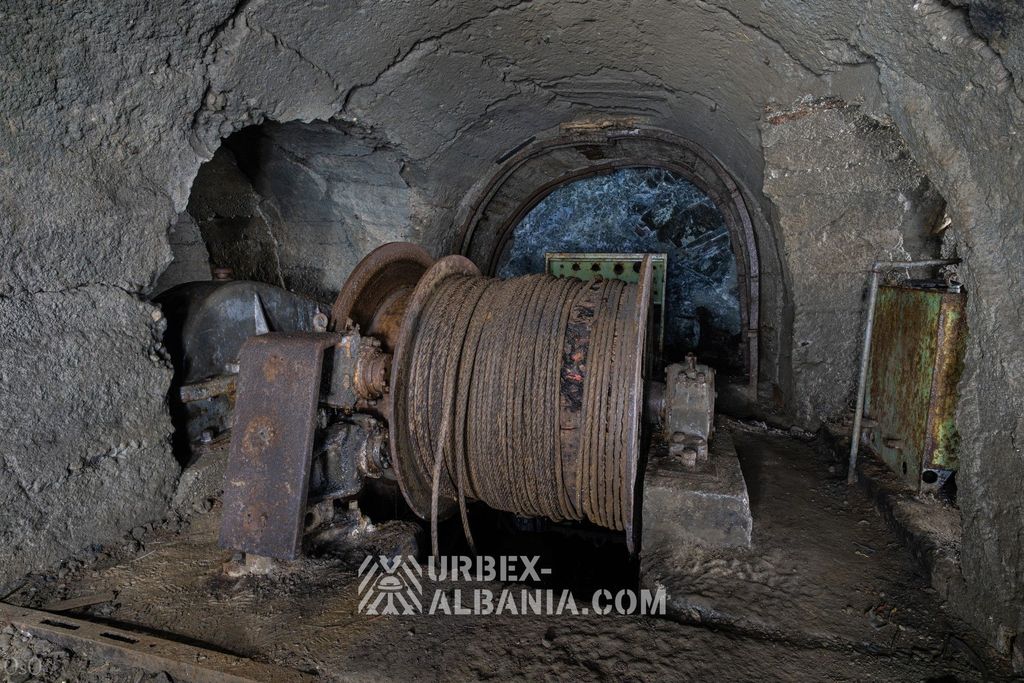
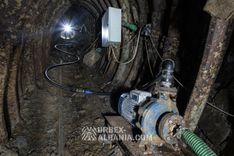
50. Incidentally, the tunnel is so narrow you can’t spread your arms. After the vertical shaft was sunk, this gallery was repurposed as a ventilation drift, and the rails were removed from the upper (non-collapse-risk) section. A pump was installed here with a green hose disappearing into a hole in the wall. Below lies the collapse-risk zone.
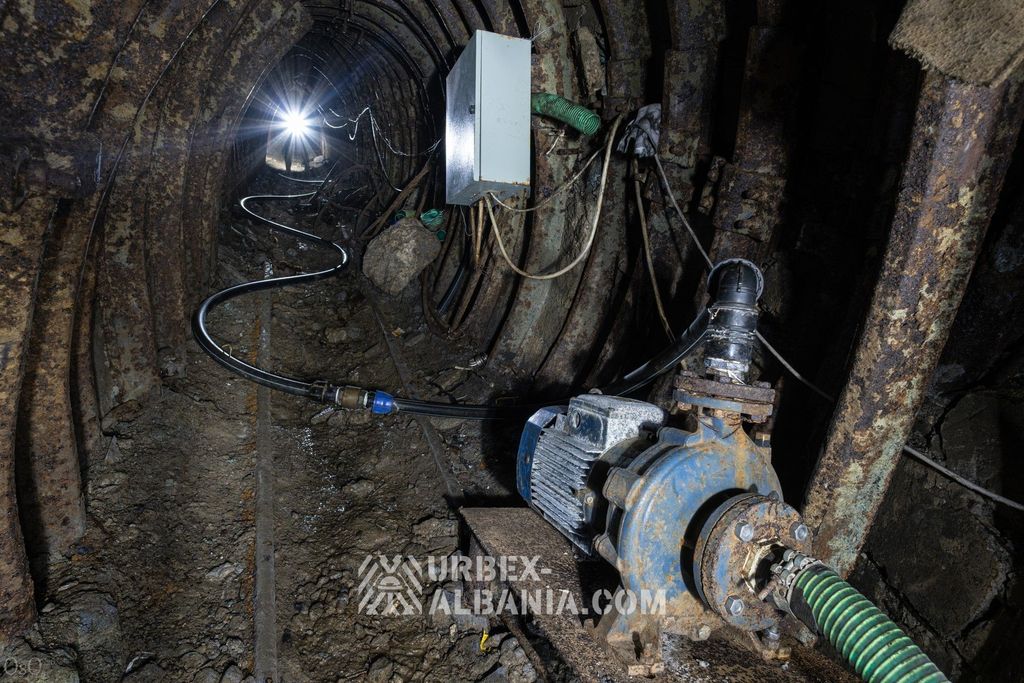
51. We’ve descended to Level 500. The rock here consists mainly of chromite interbedded with soft chlorite, which means it shifts around easily. Groundwater is actively pouring in and flooding the level. The water comes very close to the top of our boots, but thankfully it’s just shallow enough to walk along the rails without scooping water inside.
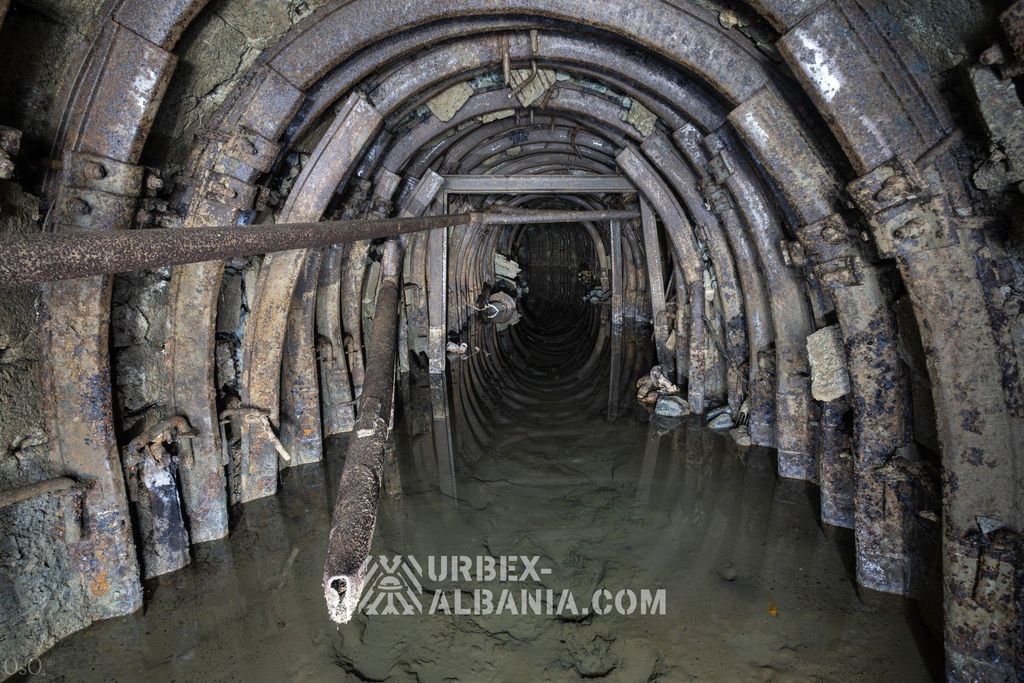
52. An original, long-rusted pump in a side branch near the bottom of the inclined shaft.
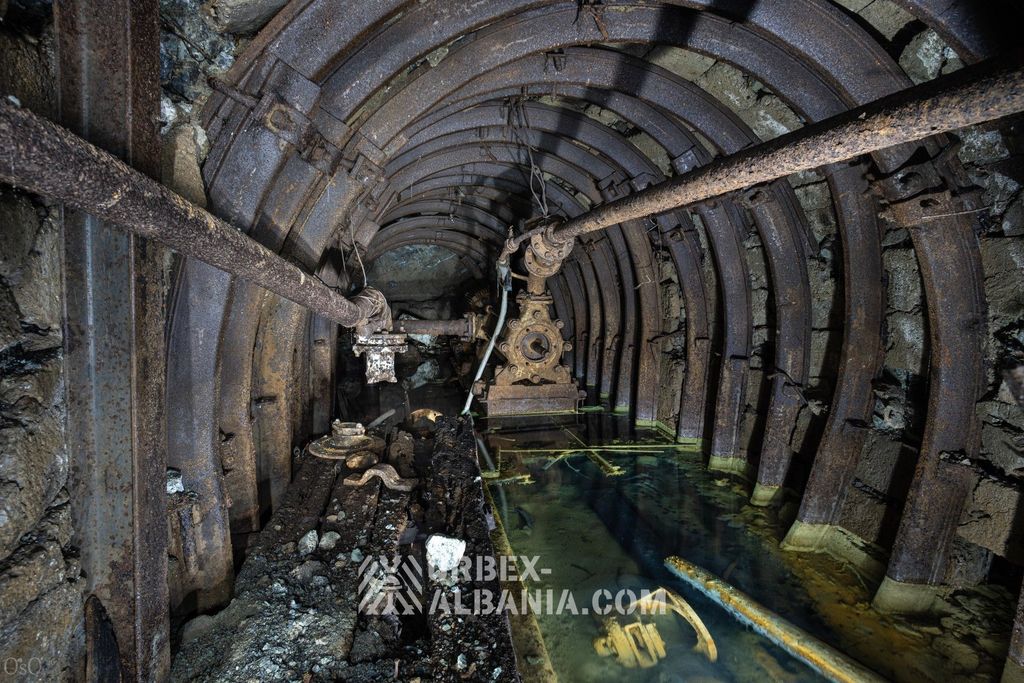
53. The rock is unstable, but it does tint the water a gorgeous turquoise :3
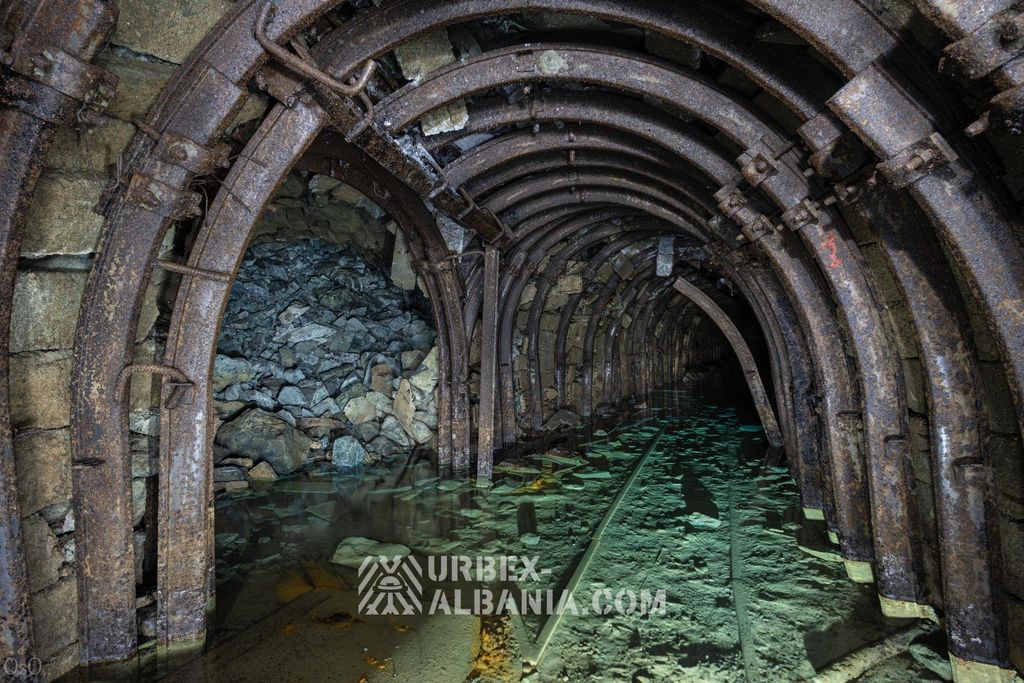
54. Natural colours, I swear.
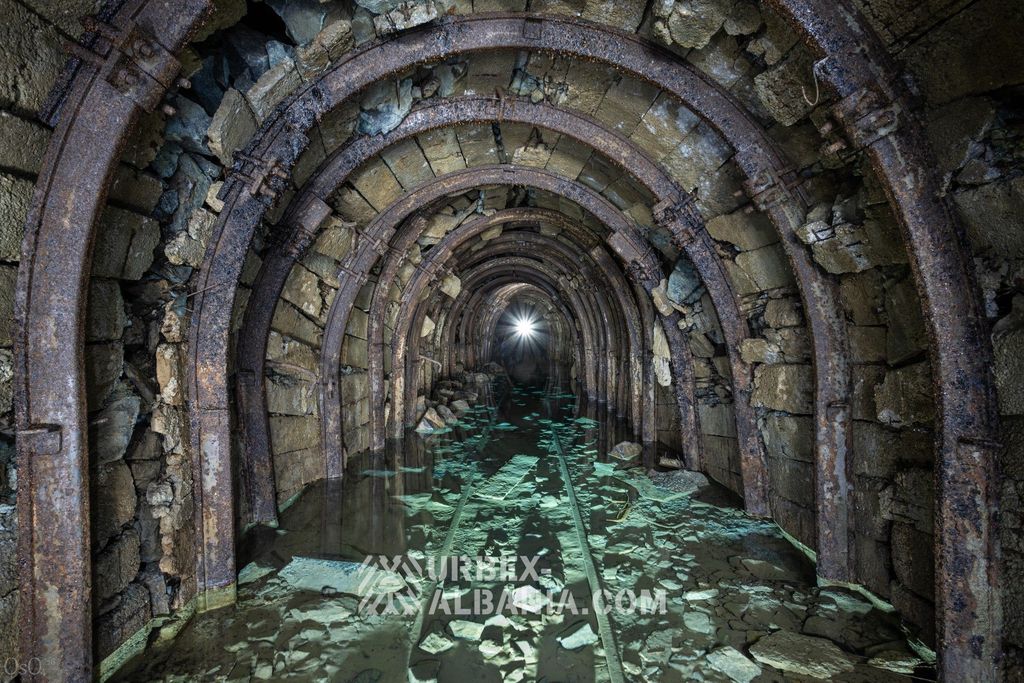
55. They were mining chromite, hit barren rock, and kept digging to the right.
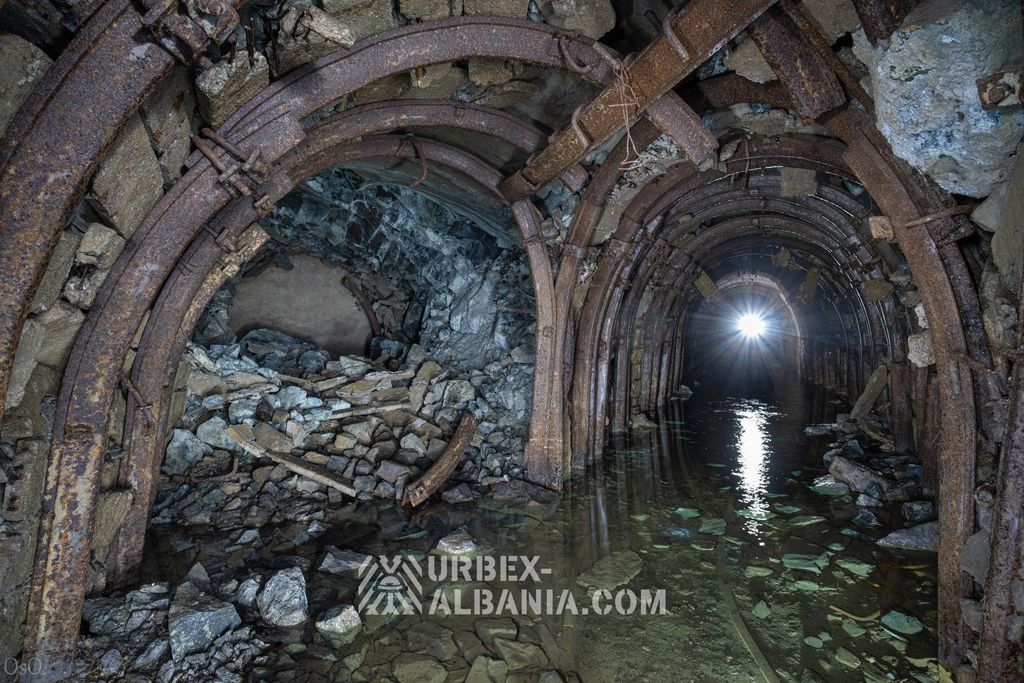
56. A picturesque collapse, complete with an ore car.
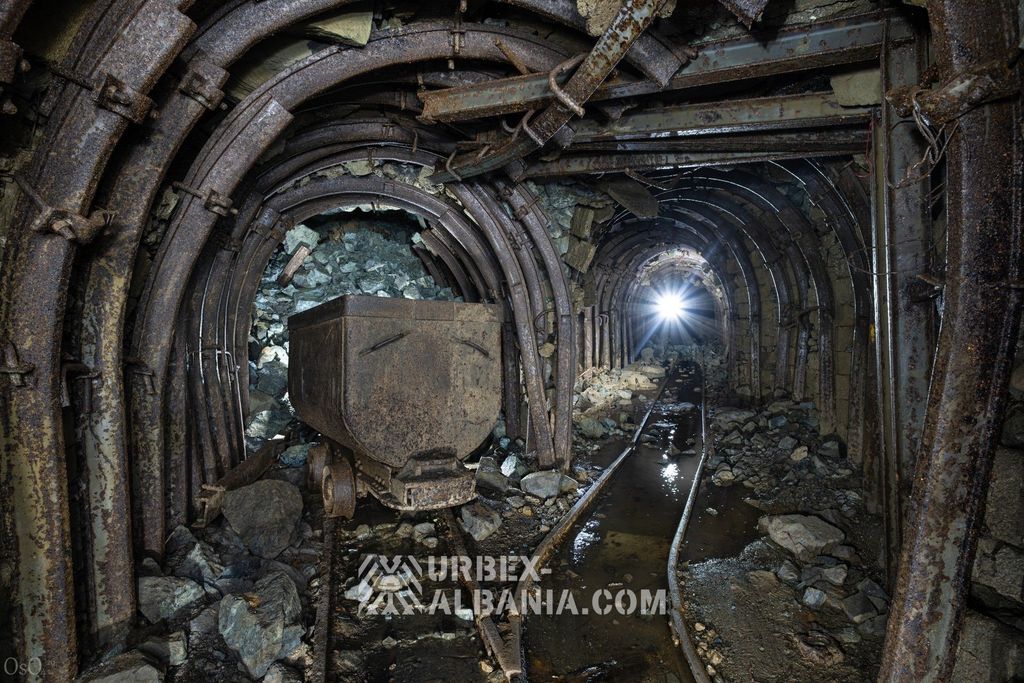
57. The timbering gives way to concrete; someone decided to store spare ore cars here.
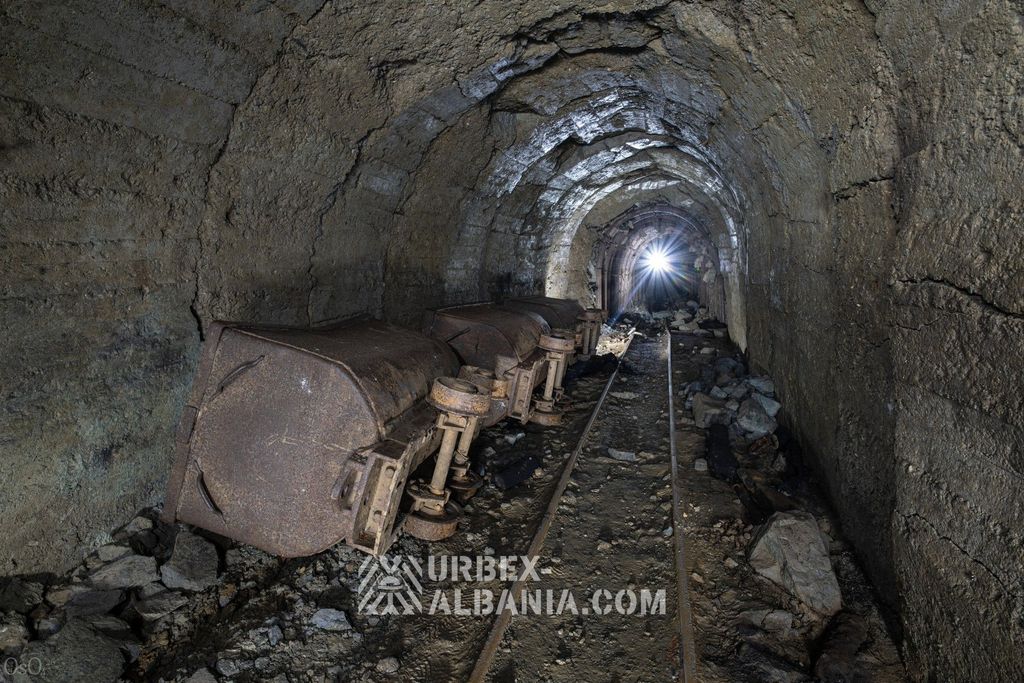
58. The last photo from this level. Off-camera there’s another inclined shaft leading down to the lower Level 550. Visible here is the drum for hoisting ore cars from Level 550 to Level 600 — with a HAND CRANK. Brutal. The Albanian capstan.
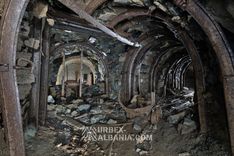
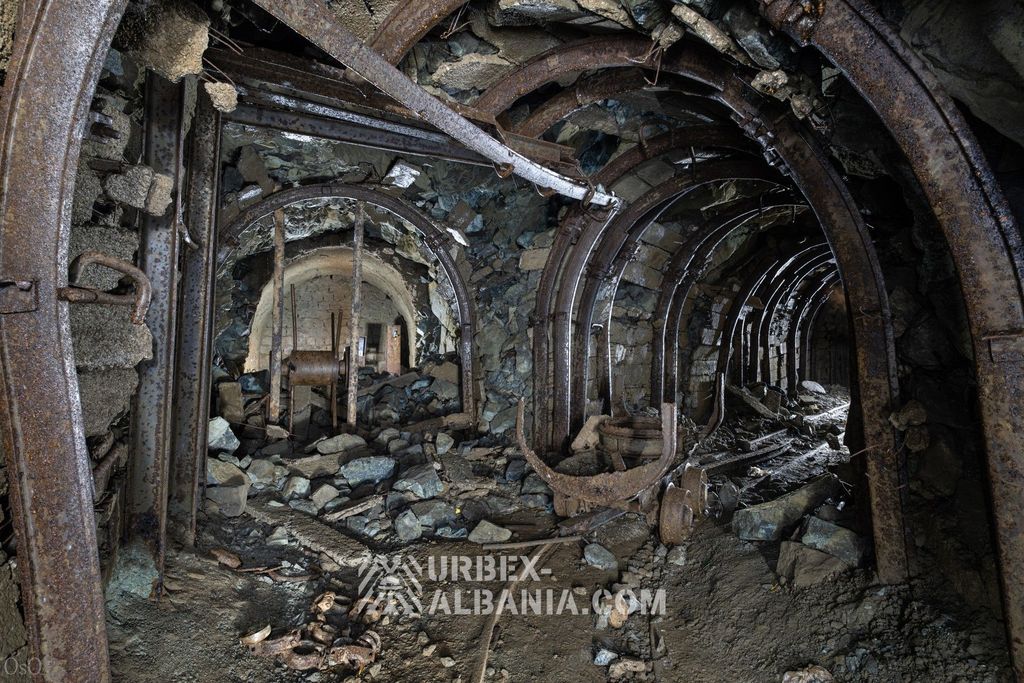
59. No point going further down — flooding and gases. Time to turn back.
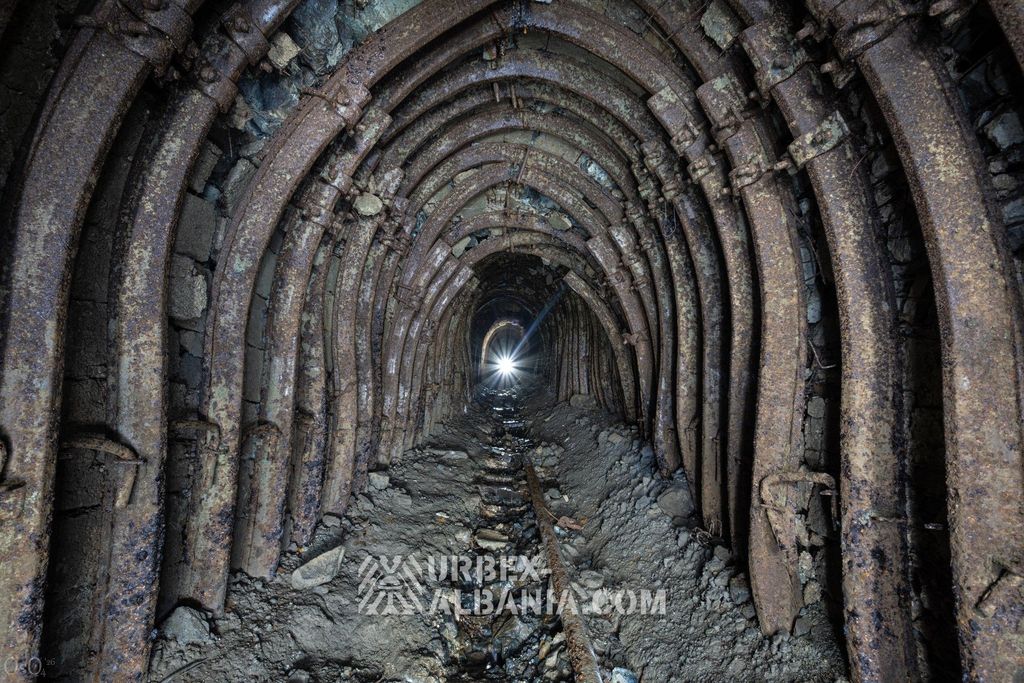
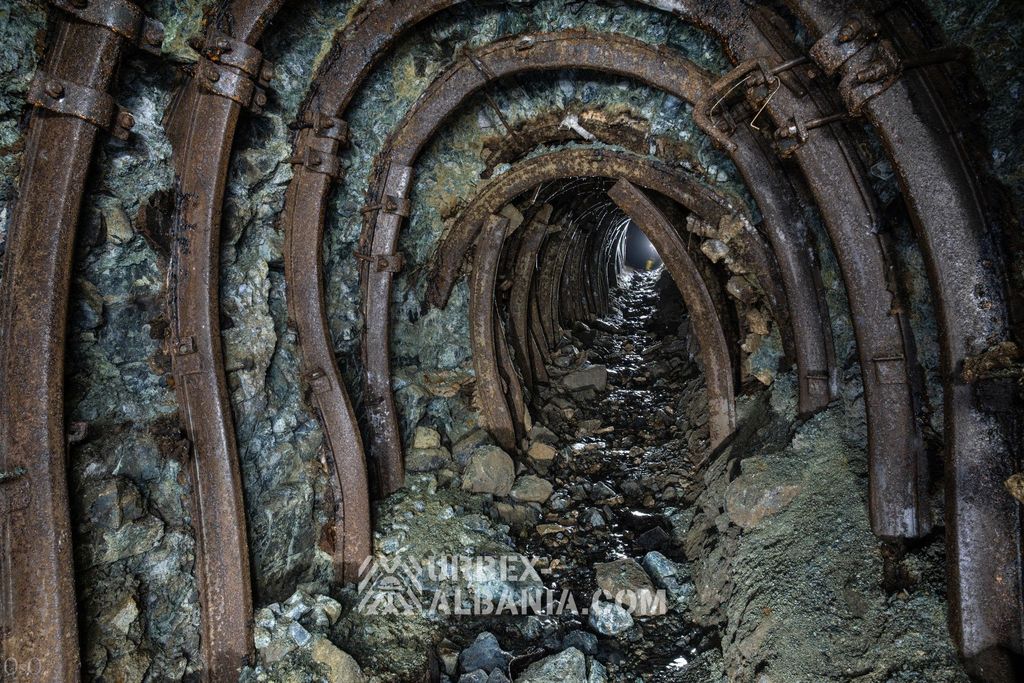
60. Here the inclined gallery passes through a mass of chlorite — extremely soft rock. Abandoned chromite mines are such fun and safe plac…
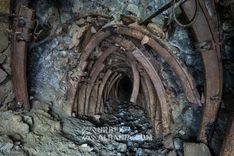
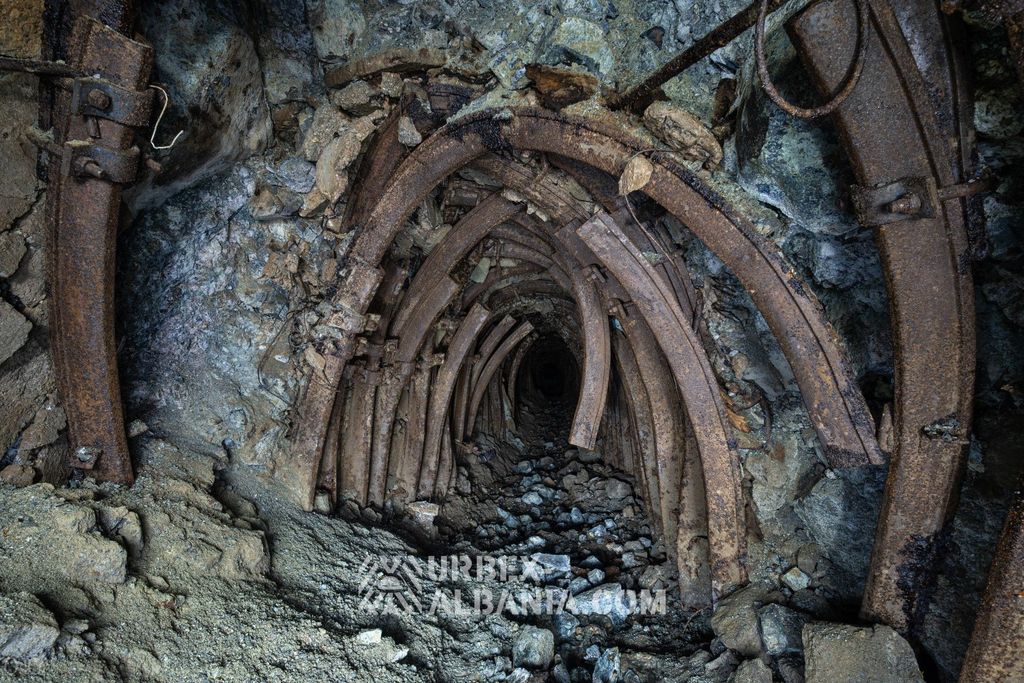
61. While taking this photograph, I heard metal scraping a couple of metres away. The rock is on the move. One day the ceiling will inevitably meet the floor — just not today, please. We head back up.
Until next time!